
A mature tree can be one of the best features of a garden, until heavy limbs begin to overhang a roof, block a driveway or put pressure on a boundary fence. Crown reduction tree work is a practical way to manage that growth without automatically removing a healthy, established tree. Done properly, it can reduce risk, improve light and keep the tree looking natural and well balanced.
For homeowners in Newtownabbey, Glengormley, Belfast and surrounding areas, the right approach depends on the tree, its condition and what sits beneath it. A careful assessment should always come before cutting starts, particularly where there are buildings, sheds, fencing, paths, parked vehicles or neighbouring gardens close by.
What is crown reduction?
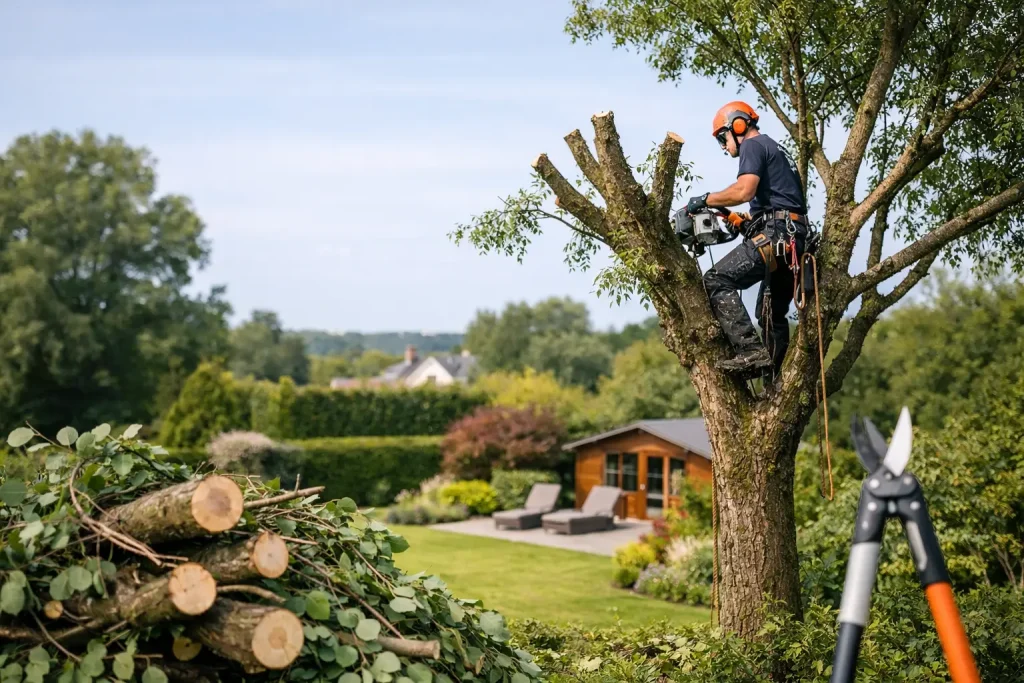
Crown reduction is the selective shortening of a tree’s outer branches to reduce the overall height and spread of its canopy. It is not simply a matter of cutting branches back at random. The aim is to make considered cuts back to suitable growth points, retaining the tree’s natural shape while reducing the weight and reach of the crown.
This is different from topping, where large sections are cut away indiscriminately. Topping often leaves harsh stumps, encourages weak, rapid regrowth and can cause long-term stress to the tree. A professional crown reduction is more measured. It removes only what is needed to achieve a clear purpose, whether that is reducing sail effect in high winds, creating clearance over a roof or easing pressure on a nearby boundary.
The amount removed matters. A light reduction may be enough to manage overhang or improve daylight, while a tree with structural concerns may require a more significant but still carefully planned reduction. Taking too much in one visit can leave a tree vulnerable, so honest advice sometimes means recommending staged work or a different solution altogether.
When crown reduction trees work is the right choice
Crown reduction is often suitable when a tree has grown beyond the available space but remains healthy enough to retain. It can be particularly helpful for broad-canopied trees in established gardens, where complete removal would dramatically change privacy, shade or the appearance of the property.
A reduction may be recommended if branches are repeatedly brushing a roof, gutters or upper windows. It can also help where limbs extend over a driveway, public footpath, garden seating area or access route. Reducing the canopy does not guarantee that every future issue disappears, but it can create sensible clearance and make ongoing maintenance more manageable.
Wind exposure is another common reason. A dense, extended canopy catches more wind, especially during severe weather. Reducing the outer growth can lessen that loading and remove selected heavy or poorly positioned branches. This is particularly relevant where a tree stands close to a house, garage, fence line or neighbouring property.
Light is worth considering too. A large crown can make rooms feel dark and prevent grass, planting or a vegetable patch from thriving. A sensitive reduction may allow more natural light into the garden without stripping the tree back severely. However, if the main problem is dense internal growth rather than the size of the tree, crown thinning or selective pruning could be the better option.
What crown reduction will not solve
Crown reduction is not a cure for every tree problem. If a tree has major decay, significant root damage, extensive disease or a dangerous lean, reducing the canopy may not be the safest answer. In some cases, removal is more responsible than repeated pruning, particularly when the tree cannot be retained without ongoing risk to people or property.
It will not stop a tree growing permanently either. Healthy trees respond to pruning, and follow-up maintenance may be needed after several years. How quickly that happens depends on the species, age, location and extent of the work. Fast-growing species in sheltered, fertile gardens can need attention sooner than slow-growing trees in more exposed ground.
Roots are another separate issue. Reducing a crown does not reliably prevent root-related damage or deal with roots lifting paving, affecting drains or competing with nearby planting. Those concerns need to be assessed on their own merits before any work is agreed.
A careful approach protects more than the tree
Tree work in a domestic garden is rarely just about the tree. Branches may be above conservatories, sheds, greenhouses, power lines, garden walls and fences. There may be limited side access, shared drives or a neighbour’s garden directly below the work area. These details shape how the job should be planned.
A reliable contractor will inspect the tree from ground level, assess access and identify what needs protecting before giving a quotation. They should explain the proposed reduction in plain English, rather than promising to make a large tree small overnight. Clear communication matters because homeowners need to know what will be cut, why it is being cut and what the finished tree is likely to look like.
During the work, branches should be lowered in a controlled manner where space is tight. This reduces the chance of damage to roofs, paving, planted borders and existing boundaries. Protecting fencing is especially important, as a falling limb can turn a straightforward tree job into an avoidable repair bill.
Tidiness is part of a professional finish. Once the pruning is complete, the area should be cleared of timber, brash and sawdust as far as practical. A garden should look improved and safer at the end of the day, not as though the work has simply been moved from the tree to the lawn.
The best time to reduce a tree
There is no single month that suits every tree. Dormant-season pruning is often preferred for many deciduous trees because the branch structure is easier to see and there is less leaf material to manage. Yet species, nesting activity, weather conditions and the reason for the work all affect timing.
For example, some trees are best pruned at particular points in their growth cycle to limit bleeding or stress. Emergency work cannot always wait for an ideal season if a damaged limb is hanging over a roof or blocking access. Bird nesting must also be considered before work begins, and any active nest should be protected.
Local restrictions are important as well. Trees covered by a Tree Preservation Order, or trees within a conservation area, may require permission or notice before pruning. This should be checked before arranging non-emergency work. A responsible contractor will not treat paperwork as an afterthought when the tree has legal protection.
Signs that it is time to arrange an inspection
Not every overgrown tree needs urgent attention, but a few changes should prompt a professional look. These include large dead branches, fresh splits in major limbs, branches rubbing against a building, visible cracks, sudden leaning, storm damage or growth that is clearly crowding a roofline or access route.
It is also sensible to act before winter storms expose an existing weakness. Waiting until a branch fails can mean more damage, more disruption and a more difficult clearance. Planned maintenance usually gives better control over the work and the result.
If a tree has been heavily cut in the past and has produced clusters of fast, upright shoots, it needs particular care. Those shoots can become substantial branches but may not be as strongly attached as natural growth. The answer is not always another severe cut. A balanced maintenance plan can often manage the regrowth more safely.
Choosing a contractor for crown reduction
Price matters, but it should not be the only consideration when branches are above your home or boundary. Ask what reduction is proposed, how access and nearby structures will be protected, whether waste removal is included and whether the contractor is fully insured. A clear quotation should set out the scope of work rather than relying on vague promises to “cut it back”.
Local experience is valuable too. Contractors working regularly around Newtownabbey understand the mix of mature residential gardens, close boundaries and restricted access that can make tree work more complex than it first appears. Abbey Tree and Fencing Services takes a safety-led, tidy approach, with recommendations based on the condition of the tree and the practical needs of the property.
A well-managed reduction should leave the tree looking like a smaller version of itself, not a collection of bare stumps. If you are concerned about an overgrown canopy, a site visit and straightforward advice can give you a clear way to protect your home, garden and boundaries while retaining the tree where it is sensible to do so.