

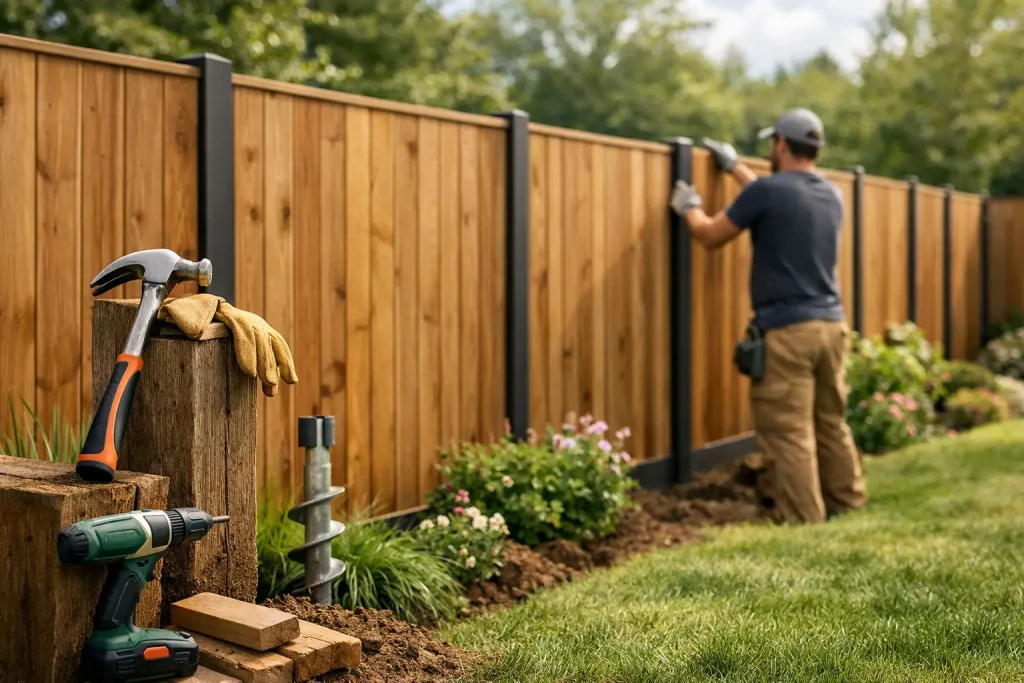
A leaning panel after a spell of wind is rarely just a cosmetic problem. It can reduce privacy, affect security, block access and place pressure on neighbouring sections. Professional fence installation gives homeowners a chance to put the whole boundary right, with a design that suits the garden, the ground conditions and the way the property is used.
For homes across Newtownabbey, Glengormley, Belfast and the surrounding area, a good fence should do more than mark a line on a plan. It needs to stand up to exposed weather, provide the right amount of screening and look tidy from both the house and the garden. The best approach is not always the tallest or most expensive option. It is the one built properly for the site.
Fence Installation Starts With the Ground
The fence people see is only part of the job. Posts, foundations and ground preparation do most of the work of keeping a boundary stable through rain, frost and high winds. If these elements are rushed, even quality panels can become loose, uneven or damaged well before their time.
Before any work begins, the site should be assessed properly. Sloping gardens, soft ground, mature tree roots, drainage runs and narrow access all affect the method used. A boundary beside a driveway or footpath also needs careful planning so posts, gates and panels do not interfere with daily access.
Old fencing can hide further issues. Rotten timber may have weakened adjacent sections, while previous repairs may have left posts at different heights or buried supports that make removal more difficult. A clear assessment avoids replacing one broken panel only to find that the rest of the line cannot support it.
Where trees or large hedges sit close to the boundary, their condition matters too. Roots can influence post positions, and overhanging growth can keep a new fence damp and shaded. Sensible pruning or hedge cutting before the fencing work can create a cleaner line and help the finished boundary stay in better condition.
What Should Your New Fence Achieve?
A fence designed for privacy is not always the same as one designed mainly for security or appearance. Being clear about the main purpose helps avoid paying for features that do not solve the real problem.
A rear garden overlooked by neighbouring homes may benefit from close-board fencing or solid panels that provide consistent screening. A front boundary may call for a lower, more open style that defines the property without making it feel enclosed. Along a side passage, a strong gate and a secure fence line can protect access to sheds, bins and the back garden.
Height needs careful consideration. A taller fence can improve privacy, but it may be unsuitable in a particular position, especially near roads, shared boundaries or where local planning rules apply. It is also more exposed to wind. Honest advice at the quotation stage should take account of the practical outcome you want, rather than simply adding height.
Appearance matters, but it should work alongside durability. Timber fencing has a traditional garden feel and can be repaired in sections when damage occurs. Concrete posts and gravel boards offer a hard-wearing structure and help keep timber panels clear of wet soil. Composite fencing may appeal where a low-maintenance finish is the priority, although it can cost more initially and needs a suitable supporting system.
Choosing Materials That Suit the Site
There is no single best material for every garden. The right choice depends on exposure, budget, maintenance expectations and the look of the property.
Close-board fencing is a dependable option for long garden boundaries. Built from individual vertical boards fixed to horizontal rails, it creates a strong and private finish that can follow slight changes in ground level. It is often a practical choice where wind exposure is a concern, provided the posts and rails are correctly sized and secured.
Fence panels are a neat, familiar solution and can be quicker to replace if one section is damaged. They are available in a range of styles, from simple overlap panels to decorative slatted designs. Their performance depends heavily on the quality of the panels and the strength of the posts holding them. A lightweight panel fitted to weak or poorly set posts will not offer a long-term result.
Concrete posts and gravel boards are often chosen for gardens where rot resistance and strength are priorities. They can make future panel replacement straightforward, but their heavier appearance may not suit every setting. Timber posts can provide a softer look, although they need to be installed and protected properly to give good service.
Gates deserve the same attention as the rest of the fence. A gate that drags, sticks or does not latch securely soon becomes frustrating. The opening must be measured accurately, the hinges matched to the weight of the gate, and the posts strong enough to take regular use without moving.
Planning Fence Installation Around Boundaries and Access
A well-built fence still needs to be in the right place. Boundary responsibility is not always obvious, particularly where old fences have been replaced more than once. Check property documents where available and speak with neighbours before work starts if the line is shared or uncertain. A straightforward conversation can prevent an avoidable dispute later.
Access is another practical consideration. Many residential gardens have narrow side passages, steps or limited space for materials. This does not prevent quality work, but it can affect how materials are brought in, how old fencing is removed and how long the job takes. A contractor should explain this clearly rather than arriving with a plan that does not fit the property.
The surrounding area also needs protecting. Established planting, paving, garden furniture and external walls can all be damaged by careless removal or storage of materials. Tidy fencing work means keeping the work area organised, removing old sections safely and leaving the garden in a condition that allows you to enjoy the improvement straight away.
Why Posts and Fixings Matter More Than Panels
Panels are the visible part of a fence, so they often receive most attention. In practice, posts and fixings determine whether the line stays upright. Posts should be positioned accurately, set to an appropriate depth and secured for the soil conditions and fence height. Spacing should support the chosen panels or boards without creating weak points.
In exposed gardens, wind loading needs particular thought. Solid fencing catches the wind, especially along long runs with no breaks. Stronger posts, suitable foundations and a sensible design can make a major difference. Sometimes a slightly more open style is the better answer where gusts are a regular issue.
Fixings should also be suitable for outdoor use. Corrosion-resistant screws, bolts and brackets help prevent staining, loosening and premature failure. Small details such as level gravel boards, aligned panels and securely fitted caps produce the clean finish homeowners expect, while also protecting the structure from standing water.
When Repair Is Better Than Replacement
Not every damaged fence needs a complete new boundary. If the posts remain firm and the damage is limited to a panel, rail or a small section of boards, a targeted repair can be sensible and cost-effective. It can restore privacy quickly without disturbing a fence line that is otherwise sound.
Replacement becomes the better option when multiple posts are moving, timber has deteriorated across the run, or repeated repairs are starting to look uneven. A patchwork boundary may seem cheaper in the short term, but it can lead to further call-outs and a less secure result. A site visit should provide a plain explanation of what can be repaired and where a new installation offers better value.
Choosing a Contractor for Fencing Work
The lowest quote is not always the most economical choice. Ask what is included: removal and disposal of old materials, post type, gravel boards, gate furniture, ground preparation and site clearance can all change the final scope of work. A clear quotation makes it easier to compare like for like.
Look for a contractor who assesses the property rather than offering a one-size-fits-all answer. They should be able to explain the recommended fence style, identify access or safety concerns and give realistic timescales. Insurance, careful working practices and respect for neighbouring properties are especially important when boundaries sit close to homes, sheds, vehicles or mature planting.
Abbey Tree and Fencing Services provides reliable, tidy and safety-focused fencing work based on the practical needs of each property. Whether the job involves a single damaged section or a complete garden boundary, the aim is a secure, smart-looking result that is built to last.
A new fence is easiest to appreciate once the work is finished: the garden feels more private, the boundary looks straight and cared for, and you no longer need to watch a weak panel every time the weather turns. Taking time to choose the right design and installation method gives that peace of mind a much better chance of lasting.