

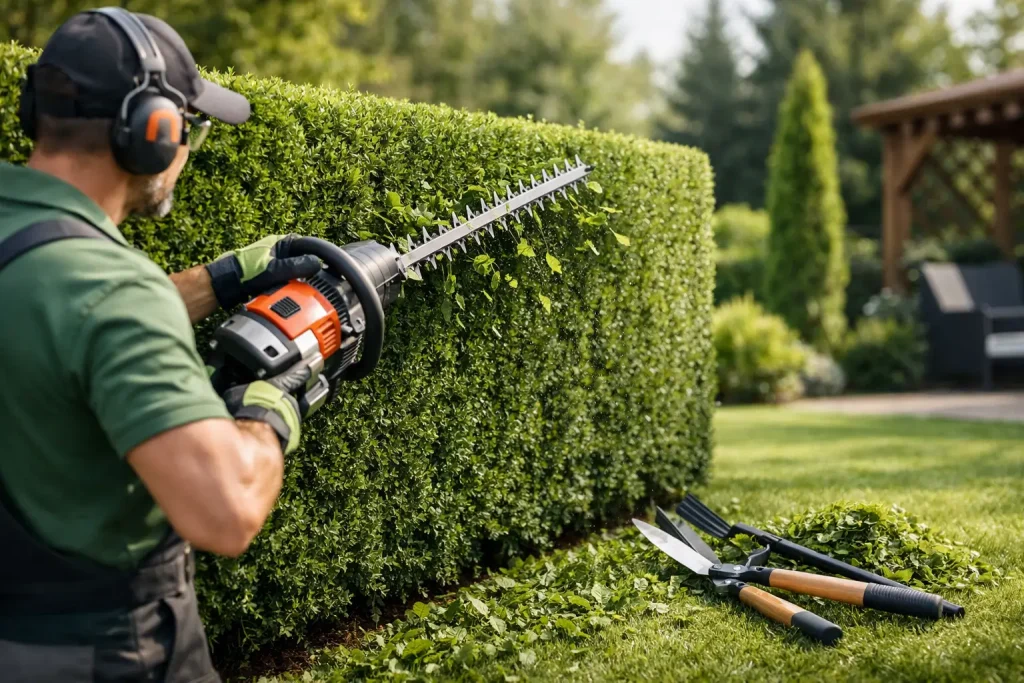
A hedge can make a garden feel properly private, soften a hard boundary and give a property a well-kept appearance. Left too long, though, it can shade rooms, block paths, press against fencing and make a garden feel smaller than it is. Professional hedge cutting services bring it back under control without leaving a harsh, uneven finish or creating unnecessary disruption around your home.
For homeowners in Newtownabbey and the surrounding area, the right approach depends on the hedge itself, its position and what you need it to do. Some hedges need a light, regular trim to stay neat. Others have become tall, wide or tangled over several seasons and need careful reduction to improve light, access and the condition of the boundary behind them.
When hedge cutting becomes more than a cosmetic job
A neatly trimmed hedge certainly improves kerb appeal, but appearance is only part of the job. Overgrown growth can narrow driveways, cover footpaths, obscure gates and make it harder to safely use a side passage. Branches can also rub against sheds, garage roofs, gutters and fence panels, particularly in windy weather.
Dense hedges often hold moisture against timber fencing. If the hedge is allowed to push continuously into a boundary, panels and posts may start to lean, rot or fail before their time. Cutting the hedge back to a sensible line gives the fence room to breathe and makes future inspections and repairs much easier.
Height matters too. A tall hedge may provide useful privacy, but when it starts casting deep shade across a patio, lawn or kitchen window, it can affect how you use the garden. A controlled reduction can improve natural light while retaining the screening that made the hedge valuable in the first place.
What a professional hedge cutting service should consider
There is no single correct height or shape for every hedge. A good result starts with looking at the whole site rather than simply cutting everything as low as possible. Access, nearby buildings, the condition of the hedge, its species, overhead obstacles and the state of neighbouring boundaries all affect the work.
At Abbey Tree and Fencing Services, the aim is to provide honest advice on the most practical option. That may mean a straightforward tidy-up, a more substantial reduction or staged work over time where a heavy cut could leave a hedge sparse or slow to recover. The most aggressive option is not always the best long-term solution.
The finished shape is important. Most garden hedges benefit from being slightly narrower at the top than at the base. This allows light to reach lower growth and helps the hedge stay fuller from top to bottom, rather than becoming thin and bare near ground level. Clean, considered cutting also creates a neater line along paths, lawns and fence runs.
Light trimming and regular maintenance
Regular maintenance is usually the easiest way to keep a hedge healthy and manageable. A light cut at suitable times of year prevents small shoots becoming thick branches and keeps the overall shape consistent. This is particularly useful for formal hedges around front gardens, driveways and entrances where a tidy finish makes an immediate difference.
Frequent, lighter work can also be more economical than allowing growth to build up for years. It reduces the need for major cutting, makes access simpler and avoids sudden loss of privacy.
Reducing an overgrown hedge
Where a hedge has taken over a garden, a reduction may be needed to regain usable space. This could involve lowering the height, bringing the sides back from a path or fence, or clearing growth away from a building. The work needs planning, especially where thick stems, uneven ground or restricted access are involved.
A mature hedge should not be treated like a quick tidy-up. Cutting too far back can expose old wood, leave gaps and affect its appearance for some time. In some cases, reducing it in stages gives a better outcome. A site assessment helps establish what the hedge can reasonably tolerate and what will achieve the result you want.
Choosing the right time for hedge work
The best timing depends on the type of hedge and the amount of work required. Evergreen hedges and fast-growing conifers often need regular attention to prevent them becoming too large, while deciduous varieties may be better suited to work during quieter growth periods.
Wildlife must also be considered before cutting begins. Hedges can provide nesting places for birds, so they should be checked carefully for active nests. If there is evidence of nesting activity, that part of the work may need to wait. This is a sensible part of responsible garden maintenance, not an afterthought.
Weather can affect the job as well. Heavy rain, high winds and very wet ground can make work less safe and can leave avoidable mess around a property. A dependable contractor will choose a safe, practical working method and communicate clearly if conditions mean the job should be rearranged.
Protecting fences, lawns and access routes
A proper hedge cutting job is about more than the final shape. It is also about protecting the garden while the work is carried out. Cutting near fence panels, gates, flowerbeds, sheds and parked vehicles requires care. The right equipment and a controlled approach reduce the risk of damage to the things around the hedge.
For properties with narrow side access, large volumes of cuttings can be awkward to move. Planning where materials will be handled and removed helps keep paths clear and prevents debris being dragged across lawns or left piled against a boundary. Once the work is complete, the area should be raked through and left tidy.
This matters especially where hedge work and fencing needs overlap. Removing pressure from a failing fence may reveal a damaged panel, loose post or weak gate that could previously not be seen. Addressing both issues sensibly can save a second round of disruption and leave the boundary looking consistent rather than patched together.
Why tidy clearance is part of the service
Hedge cuttings can quickly become a problem if they are not dealt with properly. Fine clippings spread across lawns and gravel, while thicker branches can block paths or scratch surfaces if handled carelessly. A professional service should include proper collection and clearance, leaving the garden ready to use rather than creating a pile of work for the homeowner.
Tidy clearance also gives you a clearer view of the garden. Once overgrowth is removed, it becomes easier to spot damaged fencing, uneven edges, blocked drainage points or areas that need attention. Often, cutting a hedge back is the first practical step towards improving the rest of the outdoor space.
Getting a useful quotation for hedge cutting services
An accurate quotation needs more than a rough idea of the hedge length. The height and thickness of the growth, access to the garden, distance from buildings, waste volume and whether reduction is required all affect the work involved. Photos can be helpful for an initial discussion, but a proper assessment is often the best way to identify the safest and most sensible solution.
It is worth explaining what is bothering you most. Perhaps the hedge has blocked a gate, made a patio dark, damaged a fence or simply become difficult to maintain. That gives the contractor a clear outcome to work towards, rather than assuming the job is only about cutting everything down.
A well-managed hedge should give your home privacy and definition without taking over the garden. With careful cutting, clear communication and a tidy finish, it can become an asset to the property again rather than another job waiting for next weekend.