

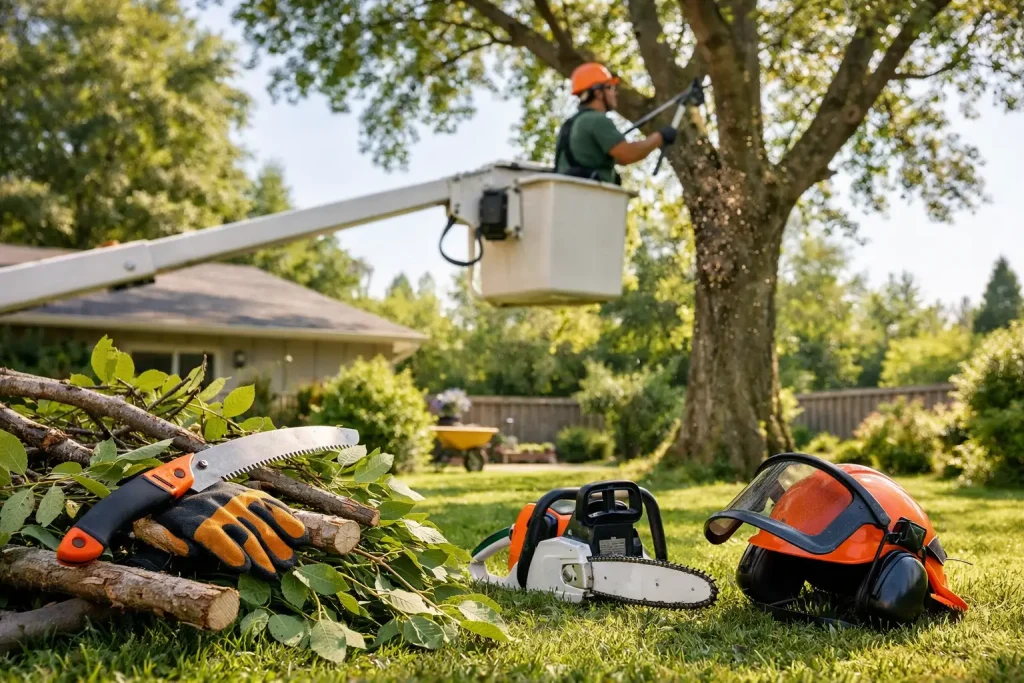
A mature tree can be one of the best features of a garden, providing shelter, privacy and character. It can also become a risk when branches begin to overhang a roof, obscure a driveway, press against fencing or show signs of storm damage. These tree maintenance tips are designed to help homeowners keep an eye on the practical issues before they become expensive or unsafe.
Good tree care is not about cutting everything back hard. The right approach depends on the species, age, position and condition of the tree, as well as what sits around it. A tree beside a boundary fence needs different consideration from one standing at the far end of a large garden.
Start with regular visual checks
You do not need specialist equipment to spot the early warning signs. A quick look around the garden every few months, and particularly after high winds, can reveal changes that are worth acting on.
Look up for hanging, cracked or broken branches, especially above paths, patios, parking spaces and entrances. Check whether limbs are rubbing on gutters, touching roof tiles or growing too close to overhead cables. From ground level, inspect the trunk for fresh splits, cavities, loose bark or fungi growing around its base. None of these signs automatically means a tree must be removed, but they do justify a professional assessment.
Also look at the ground. Soil that has lifted on one side of a tree, newly exposed roots or a noticeable lean after a storm may suggest movement at the root plate. Keep people, vehicles and pets away from the area until it has been checked, particularly if the tree is close to a house, road or neighbouring property.
Keep branches clear of buildings and access
One of the most useful tree maintenance tips is to deal with encroaching growth before it begins causing damage. Branches that scrape against brickwork, windows, tiles or fascias can cause wear over time. Leaves and small twigs block gutters, while dense canopies can keep roofs and paths damp for longer after rain.
Clearance also matters at ground level. Low branches can restrict access to a driveway, catch larger vehicles or make a footpath awkward to use. If a hedge or tree has narrowed the entrance to a property, careful pruning can restore access without taking away all the screening and greenery that made the garden attractive in the first place.
The aim is usually selective work rather than a drastic cut. Removing the right limbs can improve clearance, light and shape while retaining a natural-looking crown. Cutting too much in one go can stress a tree and encourage weak, fast regrowth, which often creates another maintenance issue later.
Do not overlook fences and boundaries
Trees and fencing affect one another more often than homeowners expect. Branches can rub against panels in windy weather, while roots may disturb posts, paving edges or lightweight garden structures. Ivy and self-seeded saplings along a boundary can also hide rot, loose panels and damaged sections until the problem becomes more serious.
Keep a clear view of the fence line where possible. If a tree is growing close to a boundary, avoid attaching items directly to the trunk or cutting roots without advice. Root work can affect stability, and a damaged fence may need repair or replacement once the tree work has been completed. Planning both jobs together can reduce disruption and help protect the finished boundary.
Prune for a reason, not simply because it is overgrown
Pruning is often described as a way to make a tree smaller, but size is only one part of the decision. The better reasons for pruning are to remove deadwood, reduce an overextended limb, improve clearance, thin a dense area where appropriate or manage a crown that is affecting a building or neighbouring garden.
Different trees respond differently, and timing matters. Some species are better pruned outside periods of active growth, while others may have legal or ecological restrictions because birds are nesting. Before arranging substantial work, check for active nests and avoid disturbing wildlife. A responsible contractor will assess this as part of planning the job.
Be cautious with advice that recommends topping a tree or removing a large proportion of its crown in one visit. Heavy, poorly planned cuts can leave large wounds, alter the tree’s structure and lead to dense shoots that are more difficult to manage. Crown reduction, when suitable, should be measured and balanced, with cuts made back to appropriate growth points rather than leaving blunt stubs.
Give young trees the right start
Newly planted trees need attention too. In their first few years, watering during dry periods is often more valuable than frequent pruning. Water slowly enough for it to reach the root zone rather than simply wetting the surface. A layer of mulch can help hold moisture and suppress weeds, but keep it away from the trunk so moisture is not trapped against the bark.
Check stakes and ties regularly. They should support a young tree without rubbing or constricting it as the trunk thickens. Remove or adjust ties before they cut into the bark. It is a small job, but neglected ties can cause lasting damage.
When choosing where to plant, consider the eventual height and spread rather than the size of the sapling at purchase. Allow room for the canopy, roots, neighbouring fences and access routes. A tree planted too close to a wall, drain, patio or boundary may need repeated management throughout its life.
Prepare for wind, rain and winter weather
Northern Ireland weather can change quickly, and established trees are often tested during periods of strong wind and saturated ground. Before winter, remove obvious dead branches where it is safe to do so and make sure gutters, paths and driveways are not directly beneath loose or damaged limbs.
After a storm, resist the temptation to climb a ladder with a saw. Partially detached branches can shift without warning, and damage is not always visible from below. A branch caught in another part of the canopy may look secure until it is disturbed. Trees close to buildings, roads, power lines or public access areas should be treated as a priority.
If a tree has fallen or a large limb has failed, keep the area clear and take care around broken fencing, crushed sheds and strained gates. The first job is making the site safe. Clearing timber and restoring the garden can follow once the immediate risk has been dealt with.
Know when a professional is the sensible option
Small, reachable shoots on a healthy young tree may be manageable for a confident homeowner using clean, suitable hand tools. Anything involving height, heavy limbs, chainsaws, unstable trees or close proximity to property should be left to an insured, trained tree contractor.
Professional advice is particularly worthwhile when a tree has a visible lean, extensive deadwood, fungal growth at the base, storm damage or limbs over a house, conservatory, garage or neighbour’s garden. It is also sensible where access is restricted. Safe dismantling in a tight residential garden takes planning to protect roofs, sheds, fences, paving and planted areas below.
A proper site assessment should consider where sections can be lowered, how waste will be removed, whether vehicles can gain access and what needs protecting before work starts. The cheapest quotation is not always the best value if it leaves damaged turf, broken panels or a pile of debris behind.
Plan maintenance instead of waiting for a problem
Most trees benefit from being reviewed before they become urgent. A planned visit can deal with deadwood, clearance and moderate overgrowth in a controlled way, usually with fewer complications than emergency work after a storm. It also gives you time to discuss the result you want, whether that is more daylight, a tidier garden, safer access or a better relationship between a tree and a new fence line.
For homeowners around Newtownabbey and the surrounding area, Abbey Tree and Fencing Services can assess practical risks and recommend work that suits the property rather than applying a one-size-fits-all solution. Clear advice, careful protection of nearby structures and a tidy finish make a real difference when work is taking place in a lived-in garden.
A healthy tree should add value to the home without making daily life harder. Keep watching for change, act early when branches or roots begin affecting the property, and choose careful professional help when the work is beyond safe reach.