
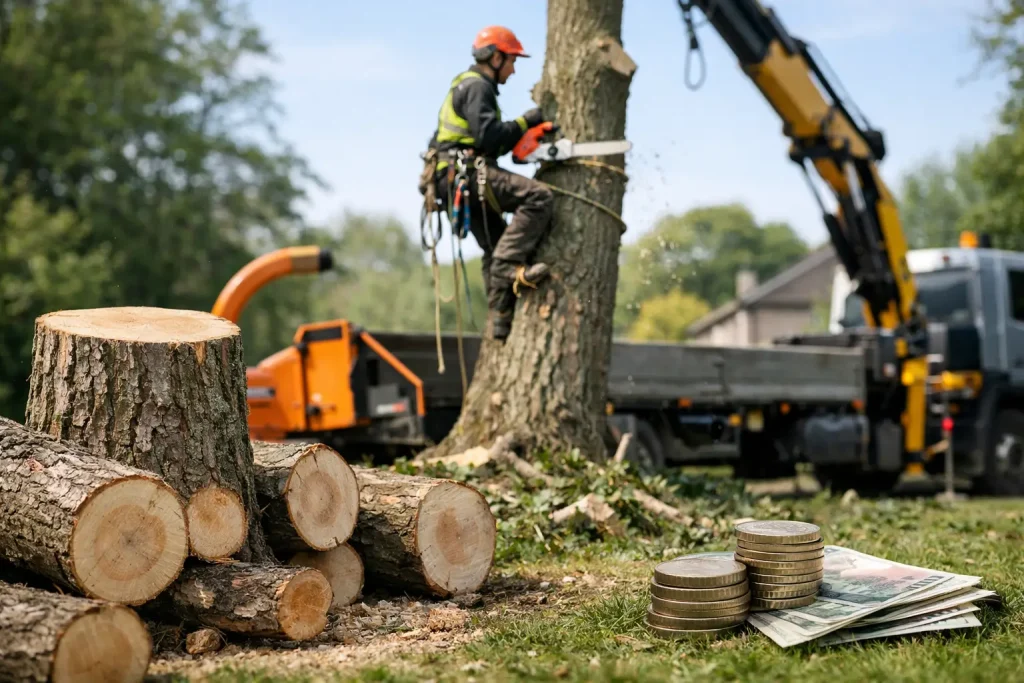
A tree can look manageable from the garden but be far more complicated once it is close to a house, fence, road, overhead line or neighbouring property. That is why tree removal cost UK figures vary so widely. A proper quote is not simply a price for cutting down a trunk – it reflects the safe method needed to remove the tree, protect what is around it and leave the site tidy afterwards.
For homeowners in Newtownabbey, Belfast and the surrounding area, the most useful starting point is to understand what is included, rather than choosing a contractor on the lowest figure alone. Safe tree work takes planning, suitable equipment, insurance and a clear approach to access, waste and any risk to buildings or boundaries.
Typical tree removal cost UK ranges
As a broad guide, removing a small, straightforward tree with clear access may cost around £250 to £500. A medium-sized tree, particularly one requiring sections to be lowered carefully, may fall between £500 and £1,000. Large, mature or awkwardly positioned trees can cost £1,000 to £2,500 or more.
These are guide prices, not fixed rates. A small tree in a tight back garden can take more time and care than a larger one standing in an open area. Likewise, a tall tree may be relatively efficient to remove where there is safe vehicle access and plenty of room for lowering branches.
Emergency work after high winds can also cost more than planned removal. A split limb hanging over a roof, driveway or public pavement needs an urgent, controlled response. The priority in that situation is making the area safe, not taking shortcuts to meet a low price.
What affects the cost of removing a tree?
The size and condition of the tree are the obvious factors, but they are only part of the picture. The final quotation should consider the whole site and the work needed to complete the job safely.
Height, spread and trunk diameter
A taller tree usually needs more climbing, more controlled dismantling and more time on site. A broad crown also produces a substantial volume of branches to process and remove. Thick trunks may need to be cut into manageable sections, especially where machinery cannot get close to the work area.
Dead, diseased or storm-damaged trees require particular care. Timber can be brittle, branches may be unstable and the usual climbing points may not be reliable. In some cases, a mobile elevated work platform or additional rigging is the safer option, which will affect the price.
Position near homes, fences and services
A tree in the middle of an open garden can often be felled in one planned direction. That is rarely possible when a tree stands beside a conservatory, garage, boundary fence, garden room, greenhouse or neighbouring garden.
In these situations, the tree is commonly dismantled in sections. Branches and trunk pieces are lowered using ropes so they do not damage roofs, paving, sheds or fencing below. This takes longer than a straightforward fell, but it is the right method for protecting the property.
Overhead cables, nearby roads and shared access routes also need to be considered before work begins. The contractor may need to establish exclusion areas, manage pedestrian access or arrange work around site-specific restrictions.
Access to the garden
Access is one of the biggest differences between a simple job and a difficult one. A wide side gate with room for a chipper and vehicle makes removing branches and timber far more efficient. A terraced property with narrow access, steps or no rear vehicle route can mean that every section must be carried through by hand.
That does not make the job impossible. It simply increases the labour involved. An honest quote should explain where restricted access affects the cost, rather than leaving you to discover additional charges after the work has started.
Waste removal and site clearance
Tree removal produces more material than many people expect. The quote may include chipping branches, removing logs and clearing sawdust and smaller debris from paths and lawns. Where appropriate, some homeowners choose to keep neatly cut logs for their own use, which can reduce the amount removed from site.
Always check what will happen to the waste. A cheaper quote may cover cutting only, leaving the customer to deal with a large pile of branches and timber. For most domestic jobs, a complete service that leaves the garden clear is better value and far less disruptive.
Stump removal is usually separate
Removing a tree to ground level is not the same as removing its stump. Stump grinding uses specialist equipment to break down the remaining stump below ground level, allowing the area to be replanted, turfed or prepared for a new fence line.
Whether stump grinding is practical depends on access, nearby services and the location of the stump. If it is beside a wall, patio or existing boundary, the safest solution may differ. Ask for this to be priced separately so you can decide whether it is needed straight away.
Permissions can affect tree removal costs
Before arranging removal, check whether the tree is protected by a Tree Preservation Order or stands within a conservation area. Rules differ across the UK, and Northern Ireland has its own planning arrangements, so it is sensible to confirm the position with the relevant local authority before work begins.
Permission may be required even where a tree appears to be on private land. Removing or heavily pruning a protected tree without consent can lead to enforcement action and significant expense. A responsible tree contractor will raise the question early and help you understand what needs checking, but the property owner should make sure the required approval is in place.
There may also be practical considerations involving neighbours. If branches overhang another garden or work requires access through adjoining land, a conversation in advance can prevent unnecessary delays on the day.
Why the lowest quote is not always the best value
Tree work is safety-critical. A low price can be tempting, especially when a tree has become an unexpected concern, but it is worth asking what that price includes. Are the workers insured? Is waste being removed? How will the tree be lowered near your house or fence? Will the site be left clean and safe?
A detailed quote gives you a clearer basis for comparison. It should set out the scope of work, such as dismantling or felling, removal of arisings, stump options and any access limitations. It should also make clear whether the price allows for protecting nearby structures and boundaries.
Professional work can prevent a modest tree problem becoming an expensive repair. A dropped limb can damage tiles, gutters, fencing, paving and parked vehicles. Poorly planned removal can compact lawns, mark driveways or leave an untidy pile of waste behind. Paying for the right method is often the most cost-effective decision.
How to get an accurate tree removal quote
The best quotes are based on a site visit. Photographs can help with an initial discussion, particularly if you include the full height of the tree, its base, nearby buildings and the access route. However, photographs do not always show lean, decay, restricted space, cable positions or the condition of the ground.
During an assessment, a reliable contractor should explain whether full removal is necessary or whether crown reduction, deadwood removal or planned maintenance would meet the same goal. If a healthy tree is simply blocking light or growing too close to a boundary, a reduction may be a lower-cost and more suitable long-term answer.
It is also useful to be clear about your priorities. You may need safer access to a driveway, more daylight to a room, clearance from a roof, or room for a replacement fence. Knowing the intended outcome helps the contractor recommend work that solves the actual problem rather than carrying out more than is needed.
For difficult, overgrown or storm-affected trees, a careful local assessment is the sensible place to start. Abbey Tree and Fencing Services provides honest advice on the safe, tidy option for the site, with attention to nearby homes, access routes and existing boundaries. A clear quotation gives you the confidence to deal with the tree before it causes a larger problem.