

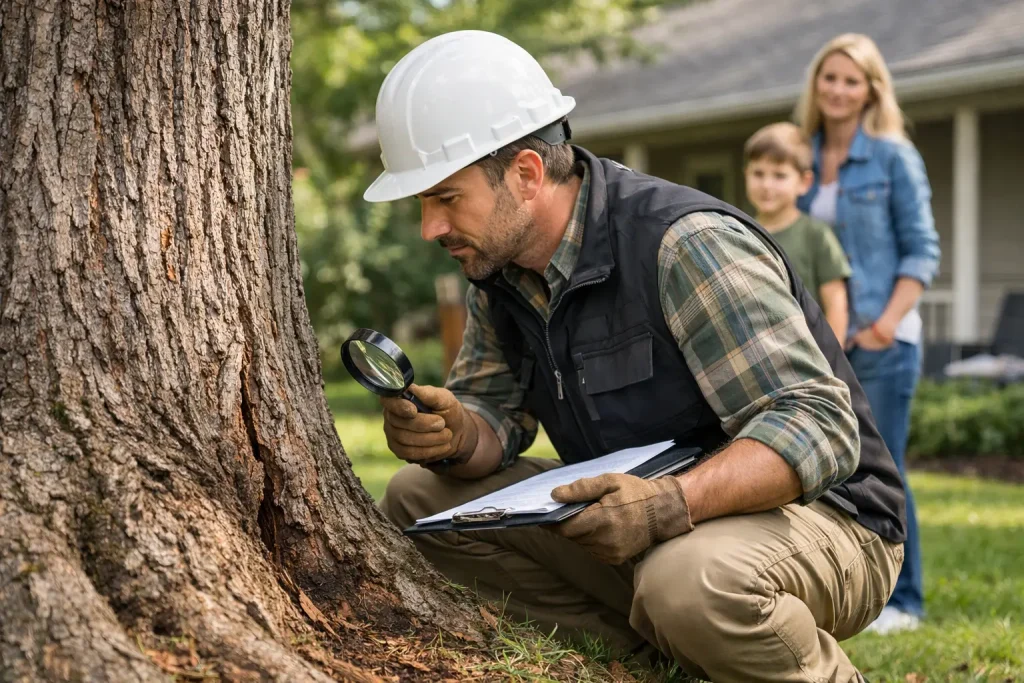
A mature tree can be one of the best features of a garden, but it should never be left to become a worry over the house, driveway or garden fence. A tree safety inspection for homeowners is a sensible way to spot obvious concerns early, before high winds, heavy rain or winter weather turn a manageable job into an urgent one.
You do not need to be a tree expert to notice changes. The key is to inspect from the ground, take a clear look at the whole tree and act promptly if anything appears unsafe. Never climb a tree, use a ladder near unstable branches or attempt to cut heavy limbs yourself.
A tree safety inspection for homeowners starts from the ground
Choose a dry, calm day with good daylight. Stand far enough back to see the full height and shape of the tree, then walk around it slowly. Look at the trunk, the main branches, the base of the tree and the area beneath its canopy.
Start by considering what the tree could affect if a branch failed. A tree growing in an open corner of a large garden presents a different level of risk from one overhanging a roof, parked car, footpath, conservatory, neighbour’s boundary or electricity line. The condition of the tree matters, but so does its location.
Pay attention to anything that has changed since you last looked. A lean that has developed recently, a branch hanging lower than usual or fresh damage after a storm all deserve closer attention. Taking a few photographs from the same position each season can make gradual changes easier to spot.
Warning signs that should not be ignored
Deadwood is one of the most common issues around homes. Dead branches may have no leaves when surrounding branches are in leaf, broken bark, brittle twigs or a pale, dry appearance. Smaller dead twigs are often a normal part of a tree’s life, but larger dead limbs above a route, patio, shed or fence should be dealt with professionally.
Cracks and splits in the trunk or where large limbs join the tree can be more serious. A split does not always mean a tree is about to fail, but it can indicate that a limb is under strain, particularly after prolonged wind. Fresh exposed wood, a visible gap or a branch that appears to be separating from the trunk should be assessed without delay.
Look for cavities, areas of decay and loose bark too. These can be signs that internal timber has weakened, even when the tree still looks healthy from a distance. Fungal growth around the base or on the trunk can also be worth investigating. Fungi are not automatically a reason to remove a tree, as some live on dead material, but they can indicate decay in roots or structural wood.
At ground level, check for raised soil, cracking around the root area or roots lifting close to the trunk. These changes can be particularly concerning after storms. Do not dig around roots or cut them back to investigate, as this can make the problem worse and may affect the tree’s stability.
A sudden lean is always more concerning than a long-established lean. Many trees grow at an angle and remain sound for years. What matters is whether the angle has changed, whether the ground is moving and whether branches or roots show signs of stress.
Check branches, clearance and nearby structures
A safe tree is not simply one that is still standing. Branches can create problems when they rub against roofs, gutters, chimneys, windows or external walls. Constant contact can damage tiles and guttering, while falling leaves and small branches can block drainage and cause damp problems over time.
Check whether growth is reducing safe access around the property. Overhanging branches may obstruct a driveway, catch high-sided vehicles, block a garden path or make it difficult to open a gate. This is especially relevant where a tree has expanded over a fence line or where a hedge and tree have grown together.
Keep an eye on branches close to overhead services. Do not try to prune anything near electricity or telephone lines. The safest response is to keep people clear and arrange the appropriate professional assessment. The same applies to a tree that has fallen onto cables or has branches tangled in them.
It is also worth looking beneath the canopy. Old timber, stacked materials, sheds and garden furniture can hide low-hanging branches or make professional access more difficult. Clearing simple ground obstacles before arranged work can help a contractor assess the tree and complete the job more efficiently, but do not move anything that is supporting a damaged limb.
Storm damage needs a calm response
Strong winds can expose weaknesses that were not obvious before. After a storm, inspect from a safe distance and avoid standing directly beneath damaged branches. A branch caught up in the canopy may look secure but can drop without warning as wind changes or the timber dries.
If a tree or large limb has fallen across a driveway, fence or garden, keep children and pets away from the area. Do not pull on branches, use a chainsaw or try to shift heavy timber by hand. Tensioned branches can spring unexpectedly, and a damaged tree may still be moving above you.
Where there is an immediate danger to people, a building or access route, seek urgent help. Emergency tree work is about making the area safe first. The right long-term solution can then be decided once the immediate risk has been controlled.
When pruning is enough and when more work may be needed
Not every concern calls for tree removal. In many cases, careful pruning is the best answer. Removing deadwood, reducing the weight of selected limbs or carrying out a crown reduction can improve clearance and reduce wind loading while retaining the tree’s shape and value in the garden.
The right option depends on the species, age, condition and position of the tree. A healthy tree that is simply too close to a roof may benefit from measured pruning. A tree with major decay at the base, severe structural cracks or widespread storm damage may need more substantial work. An honest assessment should explain why a recommendation has been made, what work is necessary and what can safely be left alone.
Be cautious of drastic cutting offered as a quick fix. Removing too much growth at once can stress a tree, create weak regrowth and leave a poor finish. Good tree work should be proportionate, planned around the condition of the tree and carried out with the surrounding property in mind.
Do not overlook boundaries and neighbouring gardens
Trees rarely stay neatly within one garden boundary. Branches can cast shade, press against fencing or drop leaves and debris into a neighbouring property. It is usually best to speak with neighbours before major work begins, particularly where access may be needed or a tree spans both sides of a fence.
A damaged fence can make tree work more complicated, and tree roots may affect the route for replacement posts or panels. Dealing with both issues as part of one planned visit can help protect the boundary and avoid unnecessary disruption. It also gives a clearer view of what needs repaired, removed or reinforced once the tree work is complete.
If you believe a tree may be protected, check with the relevant local authority before authorising work. Certain trees may be covered by a tree preservation order or other planning controls. A professional contractor can advise on the practical work required, but permissions should be confirmed before non-emergency work starts.
How often should you inspect garden trees?
For most homeowners, a visual check twice a year is a sensible routine: once when the tree is in leaf and once during winter, when branch structure is easier to see. Add another inspection after severe weather, building work nearby, root disturbance or any obvious change in the tree’s appearance.
Older, larger trees and trees close to homes, roads or boundaries deserve more regular attention. Equally, recently planted trees should be checked for loose stakes, poor ties and early signs of stress, as good establishment reduces future problems.
A ground-level inspection cannot reveal every internal fault. If you have concerns about a large tree, a professional site visit provides a safer and more informed view. The assessment should consider access, nearby buildings, fences, the direction of likely fall and how the work can be completed without creating avoidable damage.
For homeowners across Newtownabbey and the surrounding area, Abbey Tree and Fencing Services can provide clear, practical advice where a tree needs attention. The aim should be straightforward: make the area safer, protect the property and leave the garden tidy rather than turn a necessary job into further disruption.
A few minutes spent looking carefully at your trees can prevent a difficult situation later. If something does not look right, trust that instinct, keep clear of the area and arrange a proper assessment before the next spell of bad weather tests it.