
A mature tree can be one of the best features of a Belfast garden, until a heavy limb begins to hang over the roof, blocks the driveway or shifts in high winds. Choosing a tree surgeon Belfast homeowners can trust is about more than getting branches cut back. It is about making the property safer, protecting surrounding fences and buildings, and leaving the garden looking properly cared for when the work is done.
Tree work can look straightforward from ground level, but every site has its own risks. A tree close to a house, garage, overhead line, shared boundary or narrow side passage needs a planned approach. The right solution depends on the tree’s condition, its position, the access available and what you need the garden to do afterwards.
When to call a tree surgeon in Belfast
Some problems are obvious: a storm has brought down a branch, a tree has split, or roots and limbs are putting pressure on a fence. Other issues develop more gradually. A crown may become too dense, reducing light to the house and lawn. Branches can grow into gutters, scrape against windows or extend over a neighbour’s garden. A once-manageable tree may simply have outgrown the space around it.
Calling a professional early often gives you more options. A careful crown reduction or removal of selected deadwood may be enough to restore clearance and reduce strain on the tree. Leaving it too long can turn a manageable maintenance job into an urgent safety issue, particularly after prolonged rain or strong winds.
Warning signs worth acting on include visibly dead branches, cracks where major limbs join the trunk, branches overhanging roofs or access routes, and trees leaning more than they previously did. Fungal growth around the base, loose soil near the roots or damage after a storm also deserve a prompt assessment. These signs do not always mean a tree must come down, but they should not be ignored.
The right tree work for the job
Good tree surgery is not one-size-fits-all. The aim should be to deal with the real problem without carrying out unnecessary work. An experienced contractor will explain what is suitable in plain English, including where a lighter-touch solution is likely to be the better long-term choice.
Crown reduction for space, light and control
Crown reduction reduces the overall size and spread of a tree while retaining its natural shape. It can be useful where branches are reaching towards a property, shading a garden or growing over an access route. Done correctly, it takes pressure out of long limbs without leaving harsh cuts or an uneven outline.
The amount that can sensibly be reduced depends on the species, condition and previous pruning history. Cutting too heavily may cause stress and lead to weak, fast regrowth. A measured reduction is often more effective than trying to make a large tree small in one visit.
Tree removal where safety comes first
Removal may be the sensible choice when a tree is dead, seriously diseased, structurally unsound or positioned too close to a building. It can also be appropriate where a tree repeatedly damages a boundary, obstructs planned building work or has become unsuitable for a small garden.
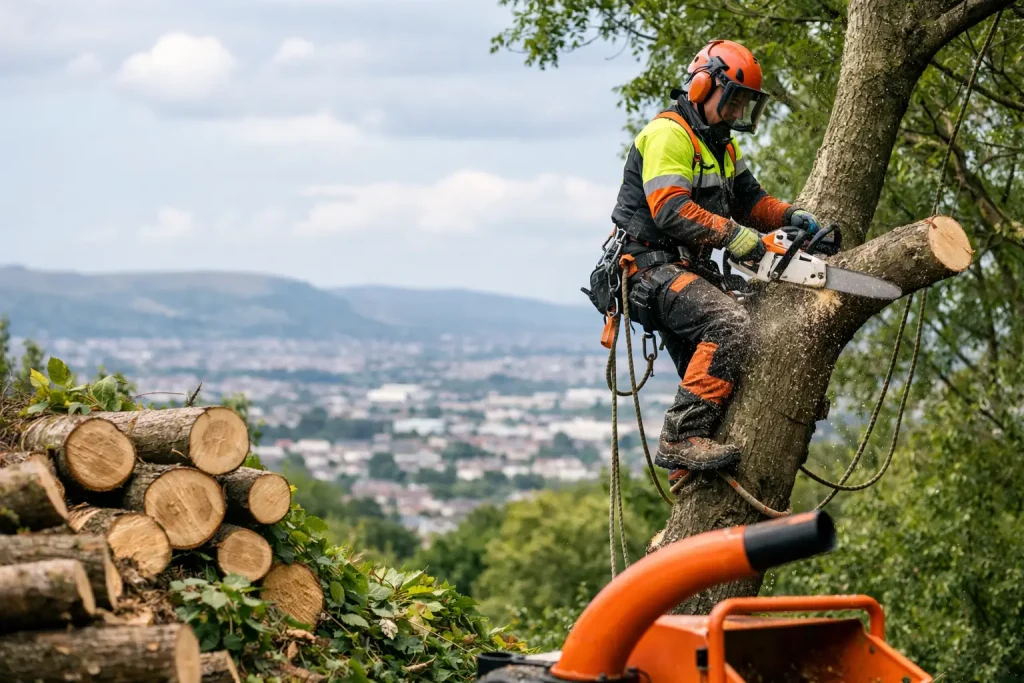
This does not have to mean disruption. A tree can often be dismantled in sections, lowering material carefully where there is limited room beneath it. This is particularly relevant in Belfast gardens with neighbouring homes, sheds, patios, greenhouses and established fencing close by. The priority is controlling each stage of the work rather than allowing branches or timber to fall where they may cause damage.
Planned maintenance keeps problems smaller
Regular maintenance is a practical option for many established trees. Removing deadwood, clearing branches from a roofline, lifting lower growth from paths and keeping a crown balanced can improve safety while preserving the tree’s character.
For homeowners who value privacy, it is also worth balancing tree work with the rest of the garden. Removing too much cover at once may make a property feel exposed. In other cases, selective pruning can improve light without losing the screening a tree provides. Honest advice should account for both sides of that decision.
Why safe access and tidy work matter
Tree surgery is not just about what happens in the canopy. The ground-level planning matters just as much. Before work begins, there should be consideration for vehicles, gates, drains, garden furniture, nearby planting, shared paths and the route used to remove waste.
Restricted access is common around Newtownabbey, Glengormley and Belfast. A narrow passage does not prevent professional work, but it affects how the job is organised. Equipment, labour and removal methods need to suit the site. In some gardens, branches must be handled and carried out in smaller sections to avoid damage to walls, fences and planted borders.
A tidy finish is part of the service, not an optional extra. Once the tree work is complete, the area should be cleared of branches, sawdust and debris so you are not left with a garden that needs another contractor to put right. This is especially valuable after storm damage, when a fallen limb can leave an access route blocked and the surrounding area looking worse than before.
Storm damage and emergency tree work
Storms can expose weaknesses that were not visible beforehand. High winds may tear out limbs, split forks in the canopy or cause a tree to lean towards a house, road or neighbouring property. If there is an immediate risk to people, buildings or access, keep clear of the area and arrange professional help rather than attempting to cut or pull damaged branches yourself.
Partially fallen branches are often under tension. What appears to be resting safely can shift without warning when cut, moved or disturbed. Emergency tree work is about making the situation safe first, then deciding whether the remaining tree can be retained, reduced or needs removal.
A 24-hour emergency callout is particularly useful when a tree blocks a driveway, closes off access to a home or threatens a boundary after severe weather. Clear communication matters in these moments. You need to know what can be made safe promptly and what follow-up work may still be required.
Protecting fences, boundaries and neighbouring gardens
Trees and fences often create the same problem together. Roots may push against posts, branches may repeatedly strike panels, and a storm-damaged tree can bring down an otherwise sound boundary line. Treating the tree without considering the fence can leave the property only half sorted.
This is where a contractor able to handle both tree and fencing work can be useful. Abbey Tree and Fencing Services can assess the condition of the surrounding boundary alongside the tree work, helping homeowners plan a practical repair or replacement once the area is safe and clear. It avoids the frustration of arranging separate visits while a damaged fence leaves a garden open or insecure.
There are occasions when work close to a shared boundary needs extra care. Neighbours may have garden structures, plants or vehicles close to the fence line, and it is sensible to let them know when access or temporary clearance could be affected. A respectful approach helps the job run smoothly and protects good neighbourly relations.
What a clear quotation should cover
A reliable quotation should be based on an assessment of the actual site, not a vague guess. The price can vary with the height and condition of the tree, access for equipment, the complexity of dismantling, waste removal and the need to protect nearby structures.
Ask what work is proposed, what will happen to the cut material and whether the site will be left clear. If stump removal is relevant, clarify whether it is included or treated separately. Stumps can be left safely in many situations, but they may be unsuitable where you plan to lay a patio, install a new fence, create a lawn area or replant close by.
It is also reasonable to check that the contractor is fully insured and takes a safety-led approach. The cheapest figure is not always the best value if it leaves waste behind, puts a fence at risk or results in a poorly pruned tree that needs corrective work later.
A better outcome for your garden
The best tree work makes a property feel safer and easier to enjoy. It might mean more daylight through the kitchen window, a clear route into the drive, a stronger fence line or the reassurance that a damaged limb has been dealt with properly. Just as importantly, it should respect the parts of the garden you want to keep.
If a tree is changing the way you use your outdoor space, arrange an assessment before the next period of bad weather turns a concern into an emergency. A sensible recommendation and careful workmanship can protect your home, your boundaries and the look of your garden for years to come.