
A mature tree can be one of the best features of a garden, but it should not become a worry every time the wind picks up. Tree surgery is the careful management of trees to keep them safe, healthy and in proportion to the space around them. Done properly, it protects your home, access routes, garden boundaries and the people using them.
For homeowners in Newtownabbey, Glengormley, Belfast and the surrounding area, the right work is rarely about cutting a tree back for the sake of it. It is about looking at its condition, position and future growth, then taking practical action before a manageable issue becomes costly damage.
What Tree Surgery Covers
Tree surgery includes several types of work, and the right approach depends on the individual tree and its surroundings. A small fruit tree beside a patio needs a very different plan from a large conifer leaning over a fence line or an established broadleaf tree close to a roof.
Crown reduction reduces the overall height or spread of a tree while retaining its natural shape. It can be suitable where branches are growing too close to a building, blocking light or putting pressure on a neighbouring boundary. A sensible reduction is selective rather than drastic. Removing too much at once can leave a tree stressed, poorly shaped and prone to weak regrowth.
Crown thinning removes selected branches to let more light and air through the canopy. It may improve the appearance of a dense tree without greatly changing its height. Deadwood removal focuses on branches that are no longer living and could fall, particularly above paths, driveways, sheds or seating areas.
Where a tree is seriously diseased, unstable, badly damaged or simply unsuitable for its location, removal may be the safest option. This is planned carefully, often in sections, to prevent harm to nearby buildings, fences, planting and access points. Stump removal can also be considered if the area is needed for new planting, turf, paving or a replacement boundary.
Signs Your Tree Needs Professional Attention
Some concerns are obvious after a storm. A broken limb hanging over a driveway, a split trunk or a tree resting against a fence needs prompt attention. Other warning signs develop slowly and are easier to miss from ground level.
Look out for dead or falling branches, large cracks in the trunk, mushrooms growing around the base, loose or lifting roots, sudden leaning, or a canopy that has become heavily one-sided. Branches rubbing against roof tiles, windows, gutters or overhead services should also be assessed before they cause avoidable damage.
Overgrown trees can create quieter problems too. They may cast too much shade over a garden, leave paths slippery with persistent damp, restrict vehicle access or overwhelm a smaller property. In these cases, tree surgery can improve light and usable space while preserving the tree wherever possible.
It is worth arranging an assessment if you are unsure. Honest advice should include the option of leaving a tree alone when no work is needed. Not every large tree is dangerous, and not every overhanging branch requires removal. The condition of the tree, its species, the season and what lies beneath it all matter.
Why Safe Tree Surgery Starts With the Site
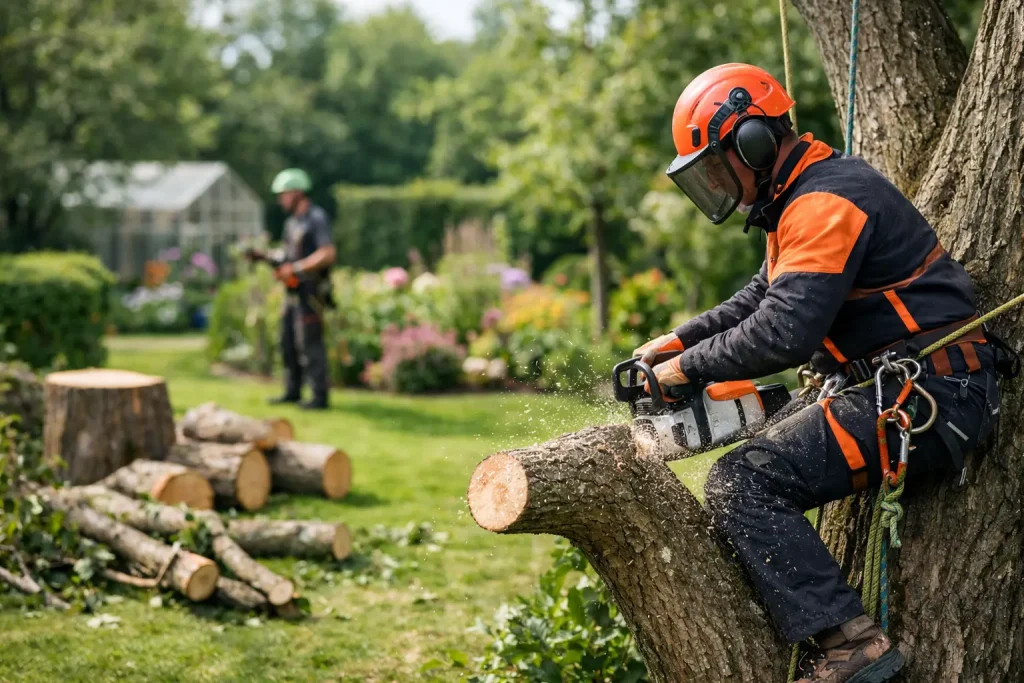
The cutting itself is only one part of professional tree work. Before work begins, the site needs to be considered properly. Access for equipment, safe working positions, the direction branches can be lowered, nearby structures and the condition of the ground all affect the method used.
A tree over an open lawn may be dealt with differently from one growing beside a conservatory, narrow side passage or newly installed fence. In tight spaces, branches are often dismantled in manageable sections rather than dropped. This takes more time, but it reduces the risk of damage and keeps the work controlled.
Good planning also protects the parts of your property that are staying. Gates, panels, garden furniture, sheds, flowerbeds and paving should not be treated as acceptable collateral damage. A careful contractor will explain how the area will be protected, what access is needed and where any timber or chippings will be placed before work starts.
Tree work can also affect neighbours. If branches cross a boundary or access needs to be shared, a straightforward conversation beforehand can prevent unnecessary frustration on the day. Clear communication is especially useful where parking, communal drives or close-set homes are involved.
Tree Removal Is Not Always the First Answer
It is understandable to think that removing a troublesome tree is the simplest route, particularly if it is close to the house. Sometimes it is the correct choice. A tree with major structural defects, extensive decay or repeated storm damage can represent an ongoing risk that pruning will not solve.
However, removal is permanent, and a well-managed reduction may provide the better long-term result. Retaining a healthy tree can keep privacy, soften the view from a property and maintain the character of a garden. The best recommendation balances safety with the benefits the tree still provides.
There can also be restrictions to consider. Some trees may be protected, or the property may be in an area where permission is required before certain work is carried out. A professional should raise this early rather than allowing work to proceed on assumptions. It is far better to establish what is permitted before arranging a date.
Storm Damage and Emergency Callouts
High winds can expose weaknesses that were not clear beforehand. A branch may tear away, a tree may partially uproot, or debris may block an entrance and leave a property difficult to access. In these circumstances, the first priority is to keep people away from the affected area.
Do not attempt to pull down a hanging branch, climb a damaged tree or cut timber that is under tension. Even a small branch can move unpredictably once it has cracked or become trapped. If there is any concern around power lines, keep clear and contact the appropriate emergency service or network operator.
For non-electrical storm damage, a 24-hour emergency tree service can make the site safe and clear urgent obstructions. The immediate job may involve removing a dangerous limb or opening up safe access, with further pruning or fencing repairs planned once the situation is stable. This is often more sensible than rushing into a full removal in poor weather.
Protecting Fences, Drives and Garden Boundaries
Trees and fences are closely linked in many gardens. Roots can lift posts and paving, branches can rub panels loose, and a fallen limb can damage an otherwise sound boundary in seconds. When tree work is planned alongside fencing, it is easier to deal with the full problem rather than make short-term repairs around an unresolved cause.
For example, cutting back persistent branch pressure before installing a new fence helps that boundary last. If a tree has damaged one section after a storm, an isolated repair may be enough, provided the remaining structure is sound. Where the whole line has aged or shifted, replacing it after the tree work can offer a neater and more durable finish.
This joined-up approach matters in compact gardens, where every metre of access and boundary space counts. It also helps prevent the familiar problem of paying for a new panel, only for the same overgrown branches to damage it again the following season.
What a Tidy, Professional Job Looks Like
A proper tree surgery service should leave more than a shorter tree behind. You should know what work has been recommended, why it is needed and what the site will look like when the job is complete. Clear quotations are particularly helpful where the scope may change depending on access, waste removal or the extent of hidden damage.
During the work, safe practices and suitable equipment matter. Afterward, the garden should be cleared of branches, sawdust and debris, with access routes left usable. Timber and green waste can be removed or dealt with by agreement, depending on what suits the customer and the site.
At Abbey Tree and Fencing Services, the aim is practical: safer trees, protected boundaries and a clean, improved garden once the work is finished. Whether the job is planned maintenance or an urgent response after bad weather, careful assessment and tidy workmanship make a real difference.
If a tree has started to feel too close, too large or too uncertain, dealing with it early usually gives you more options. A straightforward site assessment can turn a growing concern into a safe, manageable plan for your home and garden.