

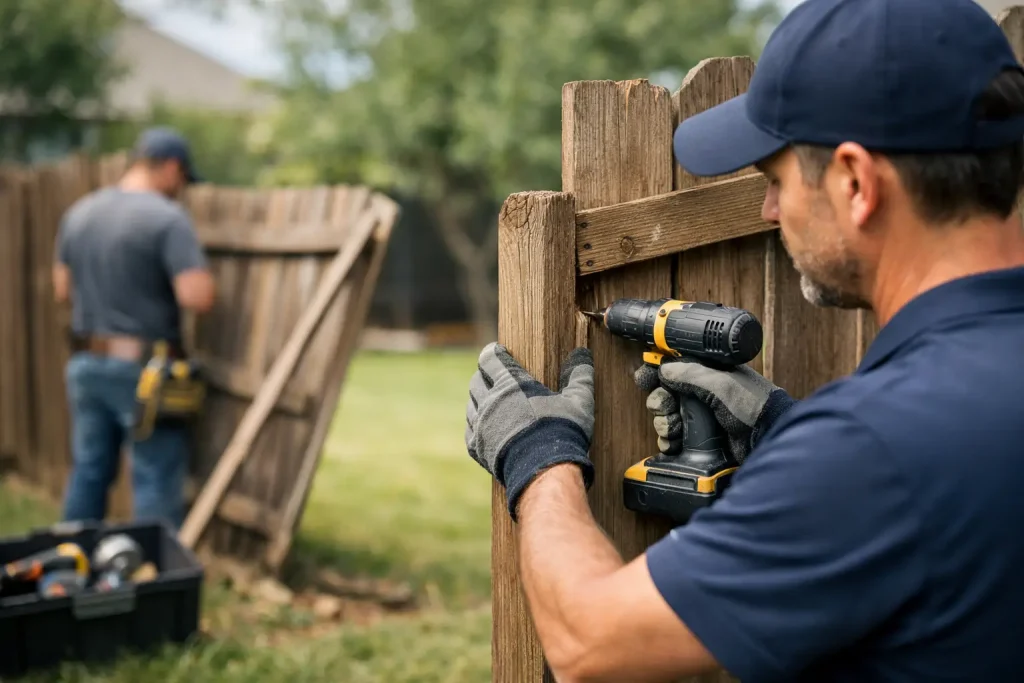
A loose panel rattling against a garden path after a night of high winds is more than an annoyance. It can expose your property, block access, damage plants or create a risk for children and pets. A professional fence repair service restores the strength of the boundary without turning a manageable problem into a larger, more costly replacement job.
For homeowners across Newtownabbey, Glengormley, Belfast and the surrounding area, the right answer is not always to replace the whole fence. A careful assessment can show whether a damaged section can be secured, whether posts have failed below ground level, or whether the fence has reached the point where a new boundary line is better value. The aim should be a safe, tidy and durable result that suits your property.
What a fence repair service should assess first
A broken panel is often the visible part of the problem, not the cause. Strong winds may have pushed against an already weakened post. Rot can begin at ground level where it is difficult to spot, while poor drainage can leave timber sitting in wet soil for long periods. In other cases, a fence has simply reached the end of its useful working life.
A reliable contractor will look at the full run of fencing before recommending work. That includes the condition of the posts, rails, panels or boards, fixings, gates and gravel boards, as well as the ground around them. They should also consider whether overgrown hedges, tree roots or a neighbouring tree are placing pressure on the boundary.
This matters because replacing one panel in a line of leaning, rotten posts may give a smart appearance for a short time, but it does not solve the underlying issue. Equally, replacing an entire fence because one section is damaged can be unnecessary. Honest advice means matching the repair to the actual condition of the fence.
Signs that should not be left until later
Some fence faults can wait for planned repair work, but others deserve prompt attention. A fence leaning over a public footpath, driveway or access route needs securing quickly. The same applies if a fallen section has left a pool, side entrance, shed or garden exposed.
You should arrange an inspection if posts move noticeably when pushed, panels have come free from their slots, rails are split, gate hinges are pulling away, or timber is visibly soft and crumbling near the base. After a storm, check the whole boundary rather than focusing only on the section that has fallen. Damage can travel along a fence line where wind pressure has strained several posts.
If a boundary is close to a tree, hedge or mature planting, the repair may need more care. Cutting back vegetation may improve access and prevent repeated rubbing, but roots and branches should be handled properly to avoid causing further damage to the garden or neighbouring property.
When repair is the sensible choice
Fence repair is usually worthwhile where the main structure remains sound. A single cracked panel, damaged rail, loose board or failed post can often be replaced without disturbing the rest of the boundary. This is especially useful where the existing fence is relatively new, matches the garden well and has plenty of serviceable life left.
Repairs can also be a practical option where access is restricted. Many gardens have narrow side passages, stepped levels, sheds, established borders or limited space between houses. A targeted repair reduces disturbance and can avoid removing more fencing than necessary.
A repair should still look considered. New timber can be selected to suit the existing style as closely as possible, whether you have closeboard fencing, lap panels, decorative panels or a simple garden gate. There may be some natural variation in timber colour at first, particularly where older fencing has weathered, but the structure should be straight, secure and neatly finished.
The trade-off is that a repaired section cannot make an ageing fence new. If the rest of the boundary is already deteriorating, it is worth considering whether further repairs are likely in the near future. A clear quotation should help you compare the immediate cost of repair with the longer-term value of replacing a larger section.
When a replacement section is better value
There comes a point where repeated patching stops being economical. If several posts are rotten, panels are sagging across the length of the garden, or the fence no longer provides suitable privacy or security, a replacement section is often the more dependable solution.
A new run of fencing also gives you the chance to correct earlier problems. Posts can be positioned properly, levels can be improved, and stronger materials can be chosen for exposed gardens. Where water collects at the base of a fence, suitable gravel boards and better ground clearance can help protect the timber from persistent damp.
This is also a good time to think about what the boundary needs to do. A front or side boundary may need a secure gate and better containment for pets. A rear garden may benefit from a higher, more private style where appropriate. A fence beside a driveway must be strong enough to cope with regular use without narrowing access or creating an obstacle.
Good fencing is not only about closing a gap. It improves the shape of the garden, gives planting a cleaner backdrop and helps the property feel cared for. The best choice depends on exposure to wind, soil conditions, access and the condition of adjoining sections.
What to expect from professional fence repairs
Fence work can look straightforward until posts need to be removed from compacted ground, damaged timber has to be cut out safely, or a boundary sits beside a busy access route. Professional work begins with a site assessment and a clear explanation of what needs doing.
Before work starts, the contractor should identify access requirements, protect nearby surfaces and take care around sheds, garden furniture, planting and existing walls. If a damaged fence is unstable, it may need to be made safe before the main repair begins. This is particularly important after high winds, when loose panels and leaning posts can shift without warning.
The repair itself should be built for the conditions, not just fitted quickly. Posts need to be set straight and securely, rails and panels need proper support, and gates should open and close without dragging. Attention to these details prevents the familiar problems of a fence that looks fine on the day but starts moving again after the first wet, windy spell.
Tidy completion matters too. Old broken sections, offcuts and disturbed material should be cleared from the working area, leaving the garden usable and the boundary looking improved. At Abbey Tree and Fencing Services, the focus is on practical recommendations, careful workmanship and a clean finish that respects the rest of the property.
Protecting your fence after repair
No timber fence is completely maintenance-free, but small checks can extend its useful life. Keep soil, compost heaps and dense vegetation from building up against the boards. Clear leaves from the base where they hold moisture, and make sure water can drain away rather than sitting around the posts.
After severe weather, walk the boundary and look for movement before it becomes a failure. Check gates regularly, as a sagging gate can place extra strain on posts and hinges. If a panel begins to lift, a rail splits or a post starts leaning, arranging a repair early is usually safer and less disruptive than waiting for a collapse.
A sound fence gives you privacy, security and a clearer edge to the garden. If yours has been damaged by weather, wear or pressure from surrounding growth, a straightforward assessment can identify the safest next step and keep a small issue from becoming a broken boundary.