

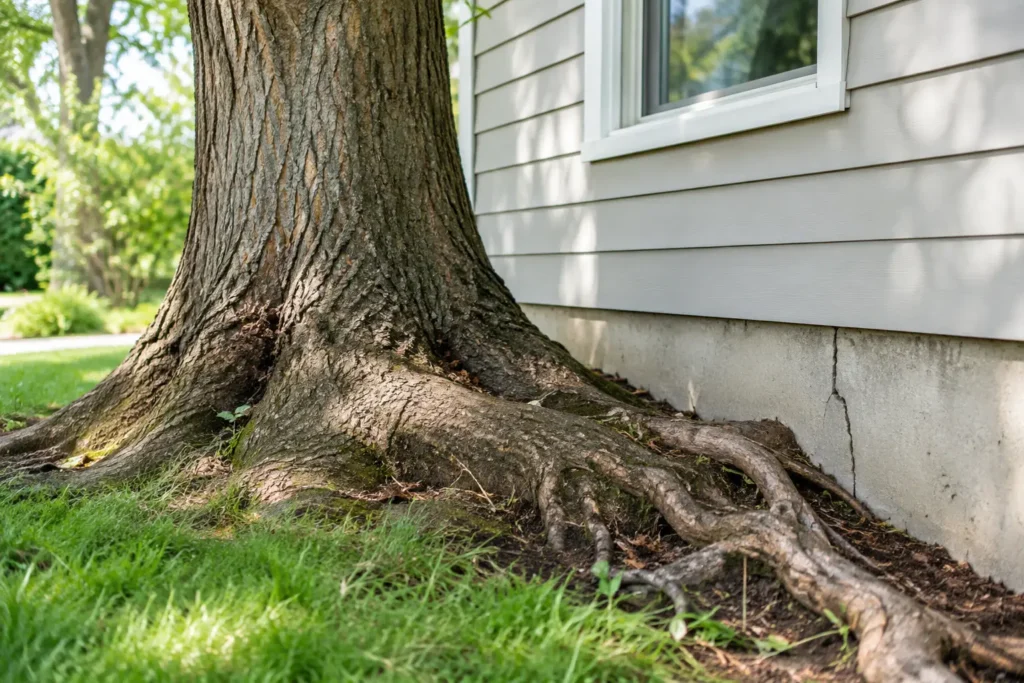
A mature tree can be one of the best features of a garden, providing privacy, shade and character. But can trees damage foundations? In some situations, yes – although the risk is often misunderstood. The concern is not usually a root forcing its way through sound concrete like something from a film. More often, it is about how trees affect the soil around a property, especially where the ground is prone to drying, shrinking or moving.
For homeowners in Newtownabbey, Belfast and surrounding areas, the right answer depends on the tree, its size, the soil, the age of the house and how close it stands to the building. A careful assessment is far more useful than removing a healthy tree simply because it is mature.
Can trees damage foundations directly?
Tree roots naturally seek out air, water and gaps in the ground. They can travel a considerable distance from the trunk, but they do not normally break through a properly built, undamaged foundation. Sound foundations are designed to carry the weight of a house and withstand normal ground conditions.
Problems are more likely where there is already a weakness. Roots may enter existing cracks in old drains, damaged paving, retaining walls or loose masonry. Once inside a small opening, the roots can widen it over time. That can make an existing issue more visible or more expensive to repair, but it does not always mean the tree created the original fault.
The greater concern is often indirect movement. Trees draw moisture from the soil. In clay-rich ground, a large or thirsty tree can contribute to the soil drying out during warmer periods. Clay shrinks as it dries, and if the soil beneath part of a property moves unevenly, this can contribute to subsidence. When moisture returns, clay can swell again, creating further movement.
This is why a tall, established tree near an older property on shrinkable clay deserves professional attention. It is also why the same species at the same distance may present little concern on different ground.
The warning signs worth checking
A crack in a wall does not automatically mean a tree is affecting the foundations. Homes settle, materials expand and contract, and minor surface cracks are common. What matters is the pattern, location and whether the problem is changing.
Keep an eye on cracks that are wider at one end, run diagonally from doors or windows, or appear both inside and outside in a similar area. Doors and windows that begin sticking without an obvious reason, gaps opening around frames, uneven floors, or fresh cracks in nearby paths can also point to ground movement.
Outside, look for lifted paving, damaged drains, a leaning boundary wall or roots visibly pushing against a fence line. These issues may be localised and may not involve the house foundations at all, but they still need addressing before they affect access, drainage or the security of the garden.
If you notice a sudden change after a dry spell, a storm, building work or drainage problems, take clear photographs and note the dates. A structural surveyor can advise on suspected subsidence. A qualified tree contractor can assess the tree’s condition, likely root area and the practical options for managing it safely.
Which trees are more likely to cause concern?
Size, water demand and distance all matter more than a simple list of “bad” trees. Fast-growing, high-water-demand species can have a greater effect on moisture-sensitive soils as they mature. Willow, poplar, sycamore and some conifers often need closer consideration, particularly when they are large and close to a building.
That said, an established oak or beech may have extensive roots, while a smaller tree planted in the wrong place can create problems sooner than expected. Dense hedges also use water from the soil, so a long run of mature hedge close to a wall should not be ignored simply because it is not a single large tree.
Distance is not an exact rule. Root spread can extend well beyond the canopy, but roots do not grow uniformly in every direction and will respond to soil conditions, drains and obstacles. A site visit allows the whole picture to be considered: the species, height, health, ground levels, building position, access and nearby boundaries.
Tree-related foundation risk is not always solved by removal
Removing a tree may seem like the straightforward answer, but it is not always the best first step. On clay soil, taking down a mature tree can allow moisture levels to rise again. If the ground rehydrates and swells unevenly, this can cause heave. In other words, removing a tree without considering the property and soil can exchange one risk for another.
A measured approach may involve crown reduction to reduce water demand and wind loading, planned maintenance to manage future growth, or monitoring where the tree is healthy and no damage is evident. In some cases, removal is the safest option, especially where a tree is declining, structurally unsound, causing repeated damage to hard surfaces or positioned too close to a vulnerable structure.
The right work should be based on evidence, not alarm. A responsible contractor will explain what can be achieved, what cannot be guaranteed, and whether a structural or drainage investigation should happen before major tree work is arranged.
Do not overlook drains, paths and boundaries
Foundations receive most of the attention, but nearby features often show the first signs of root-related trouble. Older drains with cracked joints can attract roots because they offer moisture and access. A blocked or broken drain may then wash soil away or soften the ground, creating a separate movement problem.
Garden paths and driveways can also lift where roots grow beneath them. This creates trip hazards and can affect vehicle access. Fence panels may become uneven when roots disturb posts or when a neighbouring tree changes the ground level along the boundary.
These problems are often manageable with a combination of careful tree work, root-aware repairs and sensible reinstatement. Cutting roots at random is rarely a good idea. Large roots can affect tree stability, and excessive root cutting can leave a tree stressed or unsafe. It is better to assess the root zone before altering a path, installing fencing or excavating close to the trunk.
What to do if a tree is close to your house
Start by looking at the tree calmly. Is it healthy, stable and well maintained? Is it growing towards the property, overhanging the roof or dropping branches onto access routes? Are there visible cracks, raised surfaces or drainage issues nearby? These observations help separate a potential risk from a routine maintenance matter.
Avoid drastic pruning or removal as a reaction to a single crack. If movement is suspected, speak to your insurer and seek advice from an appropriate building professional. They may recommend monitoring, drainage checks or a survey before decisions are made. This creates a proper record and helps avoid unnecessary work.
For the tree itself, arrange a site assessment with an experienced, insured local tree specialist. Abbey Tree and Fencing Services can advise on practical options such as crown reduction, removal, storm-damage clearance and ongoing maintenance, with care taken around buildings, fences and access points. Where work is needed, a tidy, planned approach protects the rest of the garden as well as the property.
Prevention starts with sensible planting and maintenance
For new planting, choose a suitable species and allow enough room for its mature height and spread. Think beyond the house wall: drains, driveways, patios, garages, retaining walls and neighbouring boundaries all need consideration. A young tree can look modest for years before becoming a much larger maintenance decision.
For established trees, regular inspections are a practical investment. Removing deadwood, managing overextended branches and reducing an overgrown crown can improve safety and keep the tree proportionate to its setting. It also gives a professional the chance to spot changes in condition before they become urgent.
A tree close to a property is not automatically a problem, and a crack is not automatically caused by roots. The most useful next step is a clear assessment based on the ground, the building and the tree in front of you – followed by honest advice that protects your home without losing a garden feature unnecessarily.