

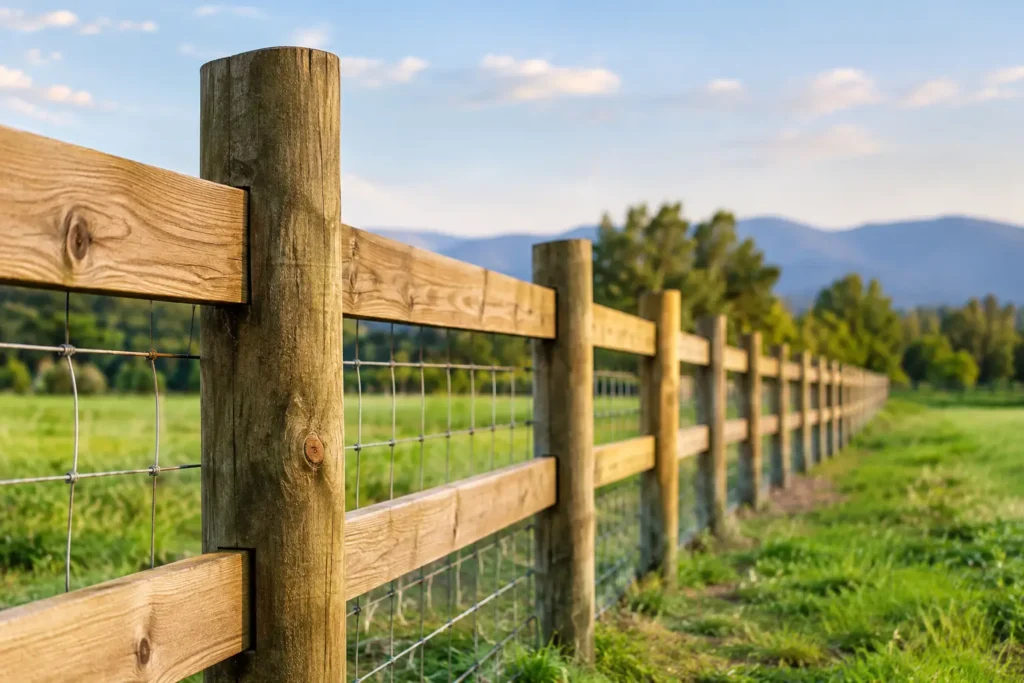
A new fence can look straight, secure and well finished on the day it is installed, yet its long-term strength usually comes down to the parts below ground. Durable fence posts carry the weight of panels, rails and gates while dealing with wet soil, wind pressure and the natural movement of a garden. Choosing the right posts at the start helps prevent leaning sections, loose panels and avoidable repair costs later on.
For homes around Newtownabbey, Glengormley and Belfast, this matters particularly in exposed gardens and sites with heavy or consistently damp ground. A fence should improve privacy and security without becoming another job after every spell of rough weather. The best solution is not always the most expensive material. It is the post and installation method that suit the boundary, soil, height and purpose of the fence.
Why the post is the foundation of any fence
Fence panels are the visible part of a boundary, but posts do the hard work. They resist side pressure from wind, support the weight of timber or composite panels, and keep every section aligned. If one post begins to move, the strain transfers to the next panel and post. What starts as a slight lean can soon become a damaged run of fencing.
Posts fail for several reasons. Timber can decay where it meets damp ground. Concrete can crack if it has been struck or installed poorly. Metal can corrode when its protective finish is damaged. In many cases, however, the material itself is not the main issue. Posts that are too shallow, too narrow for the fence height or set in unsuitable ground will struggle regardless of what they are made from.
A proper assessment looks at the whole boundary. This includes the length of the run, whether it is exposed to prevailing wind, the condition of neighbouring fencing, levels across the garden, nearby trees and roots, and the weight of any planned gate. It is practical groundwork that produces a neater and more dependable result.
Choosing durable fence posts for your garden
There is no single post type that is right for every property. Timber, concrete and steel all have a place, with different benefits and compromises.
Pressure-treated timber posts
Timber posts remain a popular choice because they give a traditional appearance and work well with closeboard, overlap and decorative timber fencing. Good-quality pressure-treated posts can offer years of service when correctly installed, particularly where the treatment is suitable for ground contact.
The key is not to treat all timber as equal. A light-duty, surface-treated post may be suitable for a temporary or low-stress job, but it is not the best choice for a permanent garden boundary. For a stronger installation, post size should match the height and wind loading of the fence. Taller solid-board fencing creates more pressure in strong winds than an open picket fence, so it needs a suitably substantial post.
Timber is often the best option when appearance is a priority and the fence is in a reasonably sheltered position. It can also be easier to repair discreetly, as individual posts or rails may be replaced without changing the character of the whole boundary.
Concrete fence posts
Concrete posts are widely chosen for boundaries where strength and low maintenance are the priorities. They do not rot in the ground, are well suited to wet conditions and can provide very solid support for concrete gravel boards and standard fence panels.
They are particularly useful where a boundary is exposed, where the soil stays damp, or where a homeowner wants a longer-lasting structure with minimal upkeep. Slotted concrete posts also make it possible to replace a damaged panel without dismantling the entire fence line.
The trade-off is appearance and weight. Some homeowners prefer the warmer look of timber, while concrete can feel more formal in a small garden. It also needs careful handling and accurate installation. A cracked or poorly aligned concrete post can spoil both the strength and finish of the fence.
Steel posts and post supports
Galvanised steel posts and systems can be a sensible option for certain modern fencing styles. They are slim, strong and less likely to suffer from rot, making them useful where a clean, contemporary finish is wanted. Their performance depends on the quality of the protective coating and the way panels or rails are fixed to them.
Steel post supports can also keep timber above the soil line. This can reduce the risk of decay at ground level, but only when the support is strong enough for the fence and set securely in concrete. They are not a shortcut for a high, heavy or wind-exposed boundary.
Ground conditions matter as much as the material
A post needs a firm footing. Garden soils vary widely, even within the same street. Some properties have dense clay that holds water, while others have loose fill, shallow soil over rubble or ground disturbed by previous building work. Each condition affects how a post should be installed.
In softer or wetter ground, the hole may need to be deeper or wider to provide proper stability. Drainage around the post can also be relevant, especially for timber. On sloping gardens, posts must be set out carefully so that panels step or rake neatly rather than leaving awkward gaps beneath the fence.
The usual rule of setting a substantial section of each post below ground is a useful starting point, but it is not a substitute for judgement. A tall closeboard fence, a solid gate or an exposed corner section may need more support than a lower run between sheltered gardens.
Concrete is commonly used to secure posts because it creates a stable base. It should be finished so water does not sit around the timber at ground level, and the post must be held plumb while the footing sets. Rushing this stage often leads to a fence that looks uneven before the work is complete.
Do not overlook gravel boards and gate posts
Durable posts work best alongside the right supporting components. Gravel boards are a practical addition to many timber fences, keeping the bottom of panels away from wet soil, splashing rain and garden debris. Concrete gravel boards offer excellent durability, while timber versions can suit a more traditional finish if they are properly treated.
Gate posts deserve extra attention. A gate applies repeated pulling and twisting force every time it is opened, especially if it is wide, heavy or fitted with solid boarding. Using an ordinary fence post for a substantial gate is a common cause of sagging hinges, dragging gates and loose fixings.
A suitable gate post should be stronger than the posts along a standard fence run and installed with the gate weight in mind. The ground beneath it, the hinge type and clearance over paths or driveways all affect the finished result. Getting these details right makes everyday use easier and reduces the chance of a gate damaging the adjoining fence.
Signs your existing posts need attention
A fence does not always need full replacement. If one panel has blown out but the posts remain firm and upright, a targeted repair may be enough. Where posts are soft at the base, visibly leaning, cracked or moving when pushed, the structure is unlikely to stay secure for long.
Look closely after high winds or prolonged wet weather. Warning signs include widening gaps between panels, rails pulling away from posts, a gate that no longer closes cleanly, or fencing that has begun to bow along its length. Leaving a weak section in place can create a safety concern, particularly near paths, driveways, children’s play areas or neighbouring property.
A careful contractor will explain whether a repair is sensible or whether replacing a longer section will give better value. Honest advice should consider the condition of the whole boundary rather than simply replacing the most obvious damaged panel.
A tidy installation protects the finished result
Strong materials still need good workmanship. Before any post holes are dug, the boundary should be checked for underground services, access limitations, tree roots, neighbouring structures and changes in level. Existing fencing needs to be removed carefully so that patios, planting beds and surrounding surfaces are not unnecessarily damaged.
Accurate line and level work is what gives a fence its clean appearance. Posts should be evenly spaced, upright and positioned so panels fit without forcing or improvised packing. Cut ends, fixings and junctions around gates should be finished carefully, because these are the areas that often show wear first.
At Abbey Tree and Fencing Services, the aim is always a fence that is safe, straight and tidy, with a recommendation based on the conditions of the individual garden rather than a one-size-fits-all approach. That may mean retaining sound sections, replacing failed posts, or building a complete boundary designed for better privacy and security.
When planning a new fence, focus first on what sits below ground and what the boundary needs to withstand. A well-chosen post, installed properly for the conditions, gives every panel above it a much better chance of staying secure, level and presentable for years to come.