

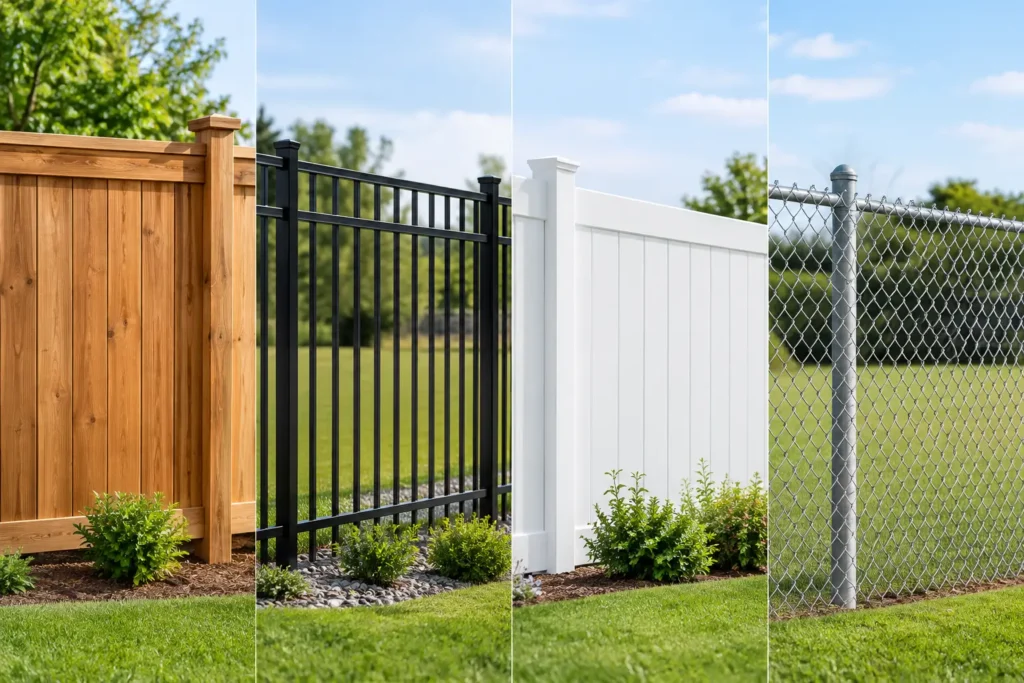
A new fence can make a garden feel more private, secure and finished, but the material you choose affects far more than its appearance. This fencing material comparison looks at the options most often considered by homeowners around Newtownabbey, from traditional timber panels to composite, metal and concrete systems. The right answer depends on your garden, exposure to wind, required privacy, budget and how much maintenance you are happy to take on.
A good boundary should suit the property rather than simply fill a gap. It also needs sound foundations, correctly positioned posts and sensible consideration for neighbouring gardens, gates, trees and access routes. Even the best-quality panels will struggle if the supporting structure is poorly installed.
Start with the job your fence needs to do
Before choosing a material, be clear about the main purpose of the fence. A rear garden boundary may need to block overlooking and provide a safe enclosure for children or pets. A front or side boundary may be more about security, kerb appeal and keeping access clear. On an exposed site, wind resistance can matter more than complete screening.
Height is another practical issue. A taller solid fence creates privacy, but it also catches more wind. In some gardens, a lower fence with trellis above, staggered boards or carefully chosen planting gives a better balance between shelter, light and screening. Boundary ownership and any shared responsibility should be checked before work begins, particularly where an old fence has failed between two properties.
Fencing material comparison: the main choices
Timber fencing
Timber remains the most familiar choice for domestic gardens, and for good reason. It is versatile, attractive and available in styles that suit traditional and modern homes alike. Closeboard fencing is a strong, practical option for privacy and security. Overlap panels are often chosen where value matters, while decorative slatted or horizontal designs can create a more contemporary finish.
The main advantage of timber is flexibility. It can be cut and fitted around uneven ground, existing walls, sheds and mature planting more easily than many rigid systems. Individual panels, rails or boards can often be repaired when damage is limited, rather than replacing a whole boundary.
However, timber needs care. Pressure-treated materials provide far better protection than untreated wood, but all timber is exposed to moisture, sunlight and changing temperatures. Over time, it may weather, fade, split or require treatment to retain its appearance. Ground contact is particularly hard on wooden posts, which is why many homeowners now combine timber panels or closeboard boards with concrete posts and gravel boards.
Timber is usually the best fit where you want a natural-looking garden boundary, straightforward repairs and good privacy without the higher initial cost of composite fencing. The quality of the timber and the installation matter greatly. A tidy, well-braced timber fence with properly set posts will last far longer than a cheaper system fitted in a hurry.
Concrete posts and gravel boards
Concrete is rarely chosen for its decorative qualities, but it is one of the most useful materials in a long-lasting fence build. Concrete posts resist rot at ground level and concrete gravel boards keep timber panels or boards away from damp soil. This can significantly extend the life of the timber above.
A concrete post-and-panel system is especially practical where a fence line is likely to receive hard weather, where previous wooden posts have rotted, or where a neighbour’s garden level is slightly different. Damaged panels can normally be lifted out and replaced without disturbing the posts.
The trade-off is appearance and weight. Concrete needs careful handling, secure installation and suitable access to the site. It can also look more functional than natural, although painted or coloured gravel boards and quality timber panels can soften the overall finish. For many properties, it offers an honest balance of durability, repairability and cost.
Composite fencing
Composite fencing uses a blend of recycled wood fibres and plastic-based materials to create boards that are designed to withstand moisture and require less upkeep than timber. It is often selected for its clean, modern appearance and consistent colour. There is no annual painting or staining requirement, and it will not rot in the same way as natural wood.
For homeowners who want a smart boundary with minimal ongoing maintenance, composite can be a strong option. It works particularly well in contemporary garden schemes and can provide excellent privacy when installed as a solid board system.
Cost is the main consideration. Composite generally has a higher upfront price than standard timber, and replacement boards need to match the system already installed. It can also become warm in strong sunlight and may show surface marks depending on the finish. Not every composite product performs equally well, so the quality of the boards, posts and fixings should be considered as a complete system rather than judged on appearance alone.
Metal fencing
Metal fencing covers several different styles, including welded mesh panels, steel railings, palisade-style security fencing and decorative garden panels. It is generally chosen where strength, visibility or security is more important than total privacy.
For side passages, front boundaries, shared access areas and properties where you need to see through the boundary, metal can be a practical choice. Powder-coated or galvanised finishes help protect against corrosion, and well-made systems can offer a long service life with modest maintenance.
Metal is less suitable if your priority is screening from neighbours. It can be paired with planting, timber infill or privacy slats, but that changes both the look and cost. Railings and mesh also need accurate line and level work to look right, particularly along a front garden where every post is visible from the road.
Natural screening and trellis
Trellis and planting can improve privacy without making a garden feel boxed in. Trellis fitted above a lower fence can add height in a lighter-looking way, while climbers and hedging soften a boundary over time. This approach is useful where light, airflow and a more natural finish are priorities.
It does require patience and maintenance. Plants need pruning, and heavy climbers can place strain on weak fence panels. If a hedge is being removed or reduced before a new boundary is fitted, the roots, remaining stumps and ground levels should be assessed first. A fence should not be forced into a line that is still unstable or obstructed by old growth.
What lasts best in Northern Ireland weather?
There is no single material that suits every exposed garden. Wind does not only push against the face of a fence – it works on posts, rails, fixings and weak points around gates. A solid six-foot panel fence may offer excellent privacy, but in an open or elevated garden it needs appropriately sized posts, secure foundations and sensible spacing.
Closeboard fencing is often a reliable choice for windy locations because it is built in place from separate components rather than relying on full panels. Concrete posts with timber infill are also a sensible long-term option where ground-level rot has caused repeat problems. Composite can perform well, but it must be installed to the manufacturer’s spacing and expansion requirements.
Drainage matters too. Water sitting around post holes shortens the life of timber and can cause movement in poorly prepared ground. A professional site assessment should take account of slopes, soft soil, tree roots, hidden services and restricted access before a quotation is prepared.
Do not overlook gates, posts and finish
A fence is only as dependable as its supporting parts. Posts carry the load, gravel boards protect the lower edge, and fixings keep everything aligned through changing weather. Gates deserve the same attention. A heavy timber gate needs strong posts and correctly sized hinges, while a side gate should open and close cleanly without dragging across a sloping path.
The finish is where careful workmanship shows. Straight lines, neat cuts around walls, secure caps and a properly cleared work area all make a visible difference. Where an existing tree, hedge or damaged fence is affecting the boundary, dealing with the cause before installing new materials can prevent an avoidable repair later.
Choosing the right material for your property
If value and a natural garden appearance are your priorities, treated timber is often the right place to start. If you want to reduce the risk of rot around the base of the fence, concrete posts and gravel boards are worth considering. If a modern look and lower maintenance justify a larger initial investment, composite may suit. For open frontage, security or visibility, metal fencing is often the more practical choice.
Abbey Tree and Fencing Services can assess the ground, access, existing boundary and purpose of the fence before recommending a practical option. Honest advice at this stage can save money compared with replacing the same unsuitable material again after the next spell of bad weather.
The best fence is not necessarily the most expensive one. It is the one that suits your garden, is installed securely and continues to do its job neatly for years to come.