

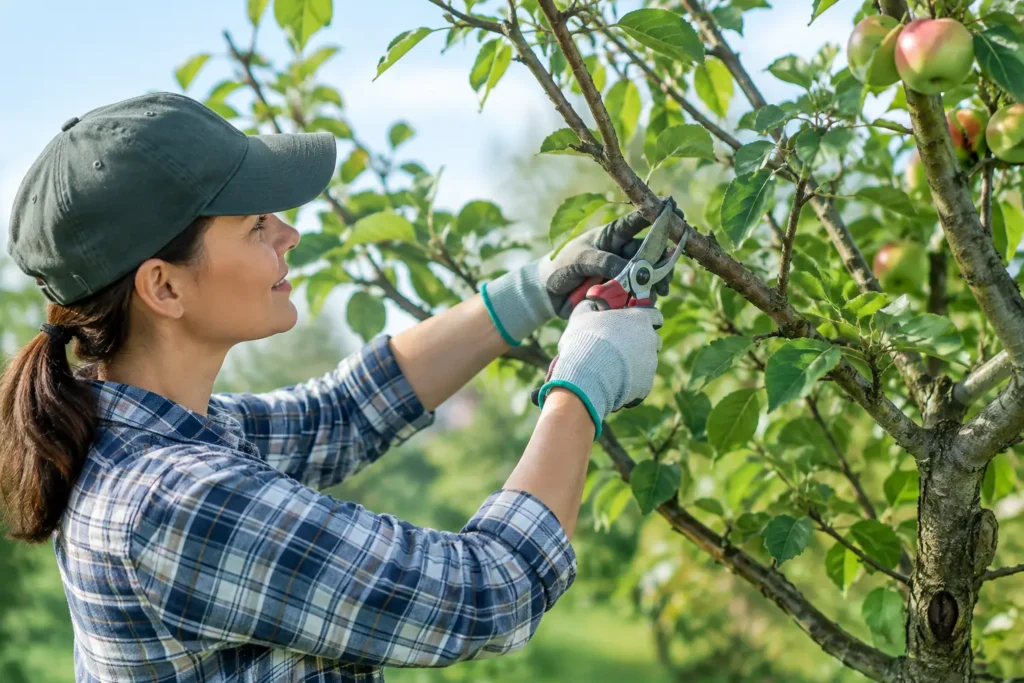
A fruit tree can look full and healthy from the garden gate while hiding crowded branches, dead wood and limbs growing towards a fence, shed or overhead access route. Sensible fruit tree pruning is not about cutting as much away as possible. It is about giving the tree a safer, stronger shape that lets in light and supports better fruiting over time.
For homeowners across Newtownabbey, Glengormley and the wider Belfast area, a well-managed apple, pear, plum or cherry tree can be a real garden asset. Left unchecked, however, it can cast too much shade, drop damaged branches, press against boundaries and become harder to manage safely. The right work at the right time protects both the tree and the property around it.
Why fruit tree pruning makes a difference
Fruit develops best where branches receive good light and air can move through the canopy. When a tree becomes dense, its energy is spread across too many shoots and leaves. Fruit may be smaller, less evenly ripened and difficult to reach. A crowded canopy also stays damp for longer after rain, which can encourage disease.
Pruning creates structure. It removes branches that are damaged, rubbing together or growing in an unhelpful direction, leaving the stronger framework behind. The result should look natural rather than stripped back: a balanced tree with enough space between main branches for sunlight to reach the developing fruit.
There is also a practical safety benefit. Dead or weakened limbs can fail in high winds, particularly after periods of heavy rain. Branches over a driveway, path, fence line or roof deserve early attention rather than a last-minute response after damage has occurred. Careful pruning can reduce the weight and wind resistance of a canopy without unnecessarily removing a valued tree.
When to prune different fruit trees
Timing depends on the type of tree and the work required. There is no single date that suits every garden, particularly where a tree is mature, overgrown or already showing signs of poor health.
Apples and pears
Apple and pear trees are commonly pruned in winter, when they are dormant and their branch structure is easier to see. A dry day between late autumn and early spring is often suitable, avoiding periods of hard frost. Winter pruning usually encourages new growth, so it is useful for shaping younger trees and removing unwanted branches from established ones.
Light summer pruning may also help where vigorous upright shoots are taking over the canopy. This can slow excessive growth and direct more energy towards fruit buds. It should be measured, though. Removing too much live growth in one visit can stress the tree and lead to a flush of weak regrowth.
Plums, cherries and other stone fruits
Stone fruit trees need a different approach. Plum, cherry, peach and similar trees are generally better pruned during the growing season, often from late spring into summer when conditions are dry. This reduces the risk of certain diseases entering fresh cuts.
That difference matters. Treating a plum like an apple simply because both are fruit trees can create avoidable problems. If you are unsure of the variety, or the tree has a history of disease, it is worth getting clear advice before work starts.
Damaged or hazardous branches
Dead, broken or dangerous branches do not need to wait for the ideal pruning season. If a limb has cracked after a storm, is hanging over a route used by the household, or is resting on a fence or outbuilding, the immediate priority is making the area safe. Emergency work should focus on removing the risk while avoiding further damage to the tree, garden and surrounding structures.
What should be removed first
Good pruning follows a clear order. Start by identifying dead, diseased and damaged branches. Then look for limbs that cross or rub together, as rubbing wounds can become entry points for decay. Branches growing inwards through the centre of the canopy are usually less useful than those growing outwards.
Water shoots and suckers are another common issue. Water shoots are fast, upright stems that grow from branches, while suckers rise from the base or roots. They can take energy away from the main framework and make the tree look untidy. Removing them is often helpful, but repeated heavy cutting can cause more to appear, so the wider condition of the tree needs consideration.
The aim is not to hollow out the middle completely. Every cut removes leaf area that the tree uses to produce energy. A well-pruned fruit tree retains enough healthy growth to remain vigorous, while avoiding the congested, shaded mass that holds back fruit production.
Avoid the common pruning mistakes
The most damaging mistake is taking too much off at once. An overgrown tree may need staged work over two or three seasons, especially where it has not been maintained for years. Heavy reduction can trigger dense, weak regrowth and leave large wounds that struggle to close properly.
Topping is another poor solution. Cutting major limbs back to short stumps may reduce height quickly, but it can spoil the tree’s structure and create unstable new shoots. Where size reduction is needed, selective cuts back to suitable side branches give a more natural, durable result.
Poor cutting technique causes problems too. Cuts should be clean and made in the correct position, without leaving long stubs or cutting flush into the branch collar. Blunt tools can tear bark and make wounds harder for the tree to manage. On a small, accessible tree, clean secateurs and a pruning saw may be enough. Once a ladder, chainsaw, overhead branch or nearby building is involved, the risk changes considerably.
Fruit tree pruning near fences, sheds and homes
Many domestic fruit trees are not standing in open orchards. They are planted beside timber fencing, close to garden buildings, over patios or beside neighbouring boundaries. That makes planning as important as the cut itself.
Before pruning begins, consider where each branch can fall and whether there is room to lower it safely. A branch that looks manageable from below can swing unexpectedly, damage a fence panel or land on a greenhouse. Restricted access can also rule out certain methods, particularly if branches must be carried through a narrow side passage without damaging gates, paving or planted borders.
Where a tree is leaning over a boundary, communication with neighbours is often sensible before work takes place. It helps avoid surprises, keeps access arrangements clear and gives everyone confidence that the job will be carried out tidily. A professional contractor will assess the tree, access, nearby services and the condition of surrounding structures before recommending the right approach.
When it is sensible to call a professional
Routine light pruning on a young, low-growing apple tree may be within reach of a careful homeowner. More involved fruit tree pruning is best left to an experienced, insured tree professional where branches are large, the tree is mature, access is limited or there is any chance of damage to a building, fence, conservatory or overhead line.
Professional help is particularly worthwhile if the tree has storm damage, visible decay, fungal growth around the base, split limbs or a noticeably leaning trunk. These are not jobs for a ladder and a borrowed chainsaw. Safe tree work needs the right equipment, controlled cutting methods and a plan for handling arisings without leaving the garden in a mess.
Abbey Tree and Fencing Services provides honest advice based on the tree’s condition and the practical needs of the site. Sometimes a light crown tidy is enough. In other cases, a careful reduction, removal of hazardous limbs or longer-term maintenance plan will give the better result. The recommendation should suit the tree and property, not a one-size-fits-all service.
A better long-term approach
Regular, light maintenance is usually kinder to a fruit tree than major corrective work every few years. Once a good shape has been established, an annual check can identify rubbing branches, dead wood and fast-growing shoots before they become a larger job. It also gives you time to plan work around flowering, fruiting and access needs.
After pruning, keep an eye on the tree through the following season. New growth should be balanced rather than concentrated in a cluster of upright shoots. If a cut area looks unhealthy, a limb begins to die back or the tree changes suddenly after a storm, arrange an assessment early. A well-tended fruit tree should reward steady care with safer branches, better light in the garden and fruit that is easier to reach when the season comes round.