

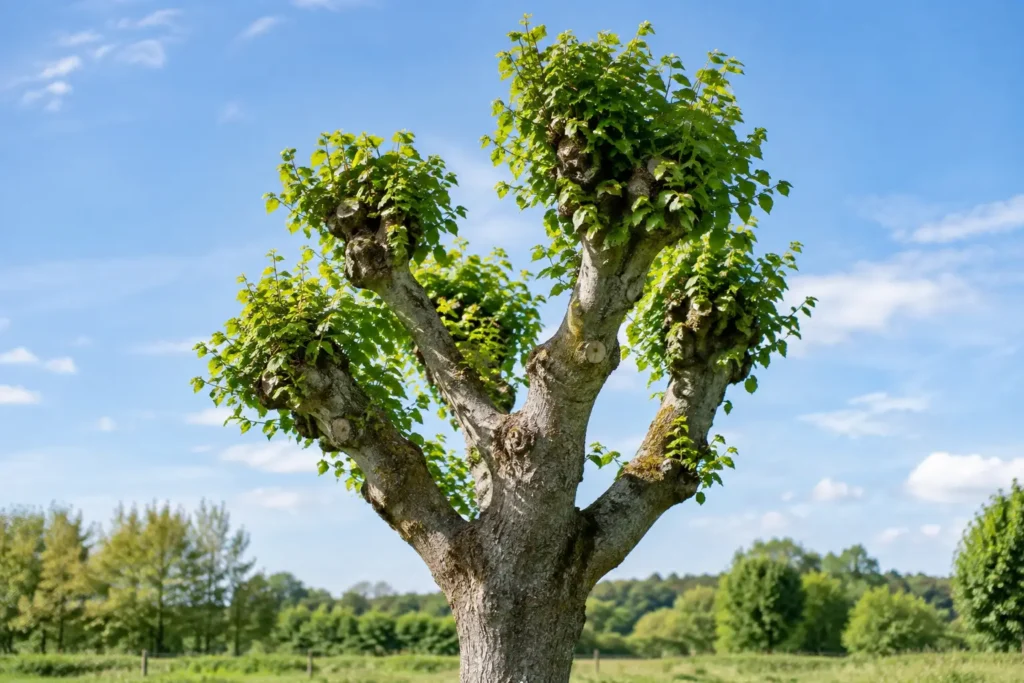
A mature tree can be a real asset to a garden, but not when large branches are pressing towards a roof, blocking a driveway, overhanging a boundary or making a small space feel dark and enclosed. Tree pollarding is one way of managing certain established trees over the long term, but it is not a quick fix for every oversized tree. Done at the wrong time, on the wrong species or without a proper plan for future maintenance, it can create more problems than it solves.
For homeowners in Newtownabbey and the surrounding area, the sensible first step is an on-site assessment. The condition of the tree, its species, its position and the space available all affect whether pollarding is a suitable option.
What Is Tree Pollarding?
Pollarding is a traditional pruning method that involves cutting a tree back to a defined framework of branches. New shoots then grow from the cut points, often known as pollard heads, and are managed on a regular cycle to keep the tree at a controlled size.
It is most often used where a tree needs to remain in place but cannot be allowed to reach its full natural height or spread. This may be beside homes, roads, footpaths, gardens, car parks or boundary fences. Rather than removing the tree entirely, pollarding can retain its presence while reducing the risk of branches interfering with buildings, access routes and neighbouring property.
The key word is managed. Pollarding is not generally a one-off job. Once a tree has entered a pollarding cycle, the new growth needs to be dealt with at suitable intervals. Leaving it too long can lead to long, heavy shoots developing from points that were intended to be regularly maintained.
Pollarding Is Not the Same as Topping
Homeowners sometimes use the word pollarding to describe any major cut-back, but there is an important difference between a planned pollard and indiscriminate topping.
Topping means cutting branches back at random points, often leaving large stubs or removing too much of the crown without regard for the tree’s structure. It can cause stress, encourage weak growth and leave the tree looking harsh or poorly balanced. It may also increase the need for remedial work later.
Proper pollarding follows a deliberate framework. Cuts are made with the tree’s species, age and future growth in mind. The aim is to create manageable regrowth from established points, not simply to make a tree smaller as quickly as possible. A professional will also consider whether a lighter crown reduction, selective pruning or removal is the safer and more responsible option.
When Tree Pollarding Can Be a Good Solution
Pollarding can work well for suitable species that respond reliably to hard pruning. Willows, planes, limes and some maples are common examples, although the health and previous management of the individual tree matter just as much as its name.
It may be considered where a tree has outgrown its setting but still provides value through screening, character, shade or wildlife habitat. In a tight residential garden, keeping a tree at a sensible scale can improve daylight without losing all privacy. Along a shared boundary, it may reduce the chance of branches rubbing on fencing or creating recurring disputes over overhang.
There are also practical safety benefits. A regularly maintained pollard can help keep branches away from gutters, roofs, overhead lines, entrances and paths. For properties with narrow side access, driveways or garages, controlling future spread can prevent an issue from becoming a difficult and costly clearance job later.
That said, pollarding is not automatically the best answer just because a tree is tall. A healthy mature tree in an open position may need little more than routine inspection or carefully selected pruning. A tree with decay, storm damage, poor root stability or major structural defects may require a different approach altogether.
The Right Timing Depends on the Tree
Most substantial tree pruning is carried out during the dormant season, when leaf cover is reduced and the tree is generally under less pressure. This often makes access, clean-up and inspection easier as well. However, there is no single date that suits every tree and every situation.
Species, weather, disease risk and the tree’s condition all need to be considered. Urgent work following storm damage is different from planned maintenance. If a branch has failed over a path or is resting on a fence, the immediate priority is to make the area safe and prevent further damage.
Wildlife must also be taken seriously. Trees can provide nesting sites, and work should not proceed where an active bird nest is present. A careful inspection before work begins is part of responsible tree management, particularly during the main nesting period.
What a Professional Assessment Should Cover
A useful quotation should be based on more than the height of the tree. Safe tree work depends on the full site picture. This includes the tree’s condition, nearby buildings, conservatories, sheds, fences, paved areas, public access and the route needed to remove arisings.
Access can change the method used. A tree at the bottom of a clear garden may be straightforward to manage, while one behind a house with limited side access may need sections to be lowered carefully by rope to protect patios, greenhouses and boundary panels. The right plan reduces disruption and avoids turning tree work into a repair bill for the rest of the garden.
A professional should also explain the likely maintenance commitment. If pollarding is recommended, ask how often the regrowth is likely to need attention and what the tree will look like in the years ahead. Honest advice means being clear about the benefits as well as the ongoing responsibility.
Protecting Boundaries, Buildings and Access
Tree growth and fencing problems often go together. Branches can strike panels in high winds, roots may affect older posts or foundations, and dense growth can make it difficult to reach a boundary for repairs. Pollarding may help create working room around a fence line and reduce repeated contact from heavy limbs, but it will not solve every root or structural issue.
Where branches overhang a roof or guttering, a measured reduction in weight and reach can help protect the property. The aim should not be to strip the tree bare. Excessive removal can expose the remaining structure to wind and sun stress, and it can leave a once-attractive garden feature looking out of place.
Good workmanship also includes the finish on the ground. Branches, woodchip and sawdust should be cleared from lawns, beds, paths and access points, leaving the property tidy and usable once the work is complete.
Permissions and Neighbouring Property
Before arranging significant work, check whether the tree is protected by a Tree Preservation Order or sits within a conservation area. Permission may be required before pruning can begin. If branches extend into a neighbouring garden, it is also wise to discuss access and planned work early, especially where ladders, ropes or lowered sections could affect their space.
Clear communication usually prevents avoidable tension. A tree may stand in one garden, but its shade, leaves, branches and safety can affect several households.
Signs It Is Time to Seek Advice
It is sensible to arrange an assessment if a tree is growing close to a roof, blocking light from main rooms, regularly shedding branches, interfering with a driveway or pressing against fencing. Visible cracks, dead wood, fungus around the base, sudden leaning or storm damage should be treated more urgently.
Avoid climbing the tree or attempting major cuts yourself. Even a small branch can be unpredictable when cut under tension, and working near a fence, greenhouse, road or overhead service adds further risk. A qualified, insured contractor can assess the safest method and manage the work with the property around it in mind.
At Abbey Tree and Fencing Services, the focus is on practical recommendations that suit the tree and the site, not on selling more work than is needed. Whether pollarding is appropriate or a lighter alternative will give a better result, the right outcome is a safer, tidier garden that remains manageable for years to come.