

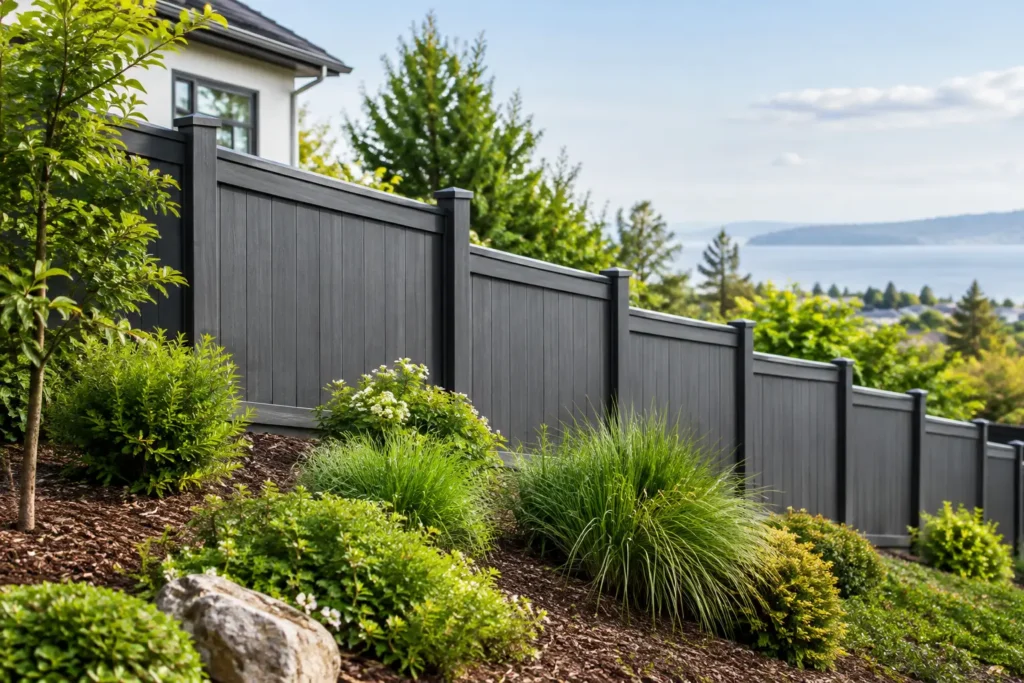
A garden slope can turn an ordinary fencing job into a boundary that looks uneven, leaves gaps underneath or puts unnecessary pressure on posts. The best fencing for sloping gardens is not simply the strongest panel available. It is the option that suits the angle of the ground, provides the privacy or security you need, drains properly and gives a neat finish from both sides.
For homeowners around Newtownabbey, Belfast and the surrounding area, damp ground, exposed gardens and changes in level can all affect the right approach. A careful site assessment makes a real difference. It allows the fence line, post positions and materials to be planned around the ground rather than forcing a straight, unsuitable design onto it.
Why a Sloping Garden Needs a Different Approach
On level ground, fence panels can usually be fitted in a simple straight run with a consistent gap beneath each section. On a slope, that same method can leave triangular spaces under the fence, make the top line look untidy or create panels that sit at awkward angles.
There are two main ways to deal with this: raking the fence to follow the slope, or stepping it down in level sections. Neither is automatically better. The most suitable choice depends on how steep the gradient is, the type of fencing being installed and whether privacy, containment or appearance is the main priority.
The ground itself matters just as much. Loose soil, poor drainage or ground that has been built up in the past may need more careful post installation than a firm, established bank. A good fence should be secure at the posts first and attractive second. If the foundations are not right, even high-quality materials will not stay straight for long.
Best Fencing for Sloping Gardens: Practical Options
Raked closeboard fencing
Closeboard fencing is often one of the best choices for a sloping garden because it is built on site rather than relying on rigid pre-made panels. Vertical featheredge boards can be cut and fixed to follow a gradual incline, creating a continuous line with fewer awkward gaps beneath the fence.
It is a strong, adaptable option for gardens needing privacy or a secure boundary. The rails follow the slope while the boards remain vertical, which usually gives a more natural appearance than a panel forced onto an angle. It can also be adjusted around changing ground levels, established shrubs and slightly uneven boundaries.
Closeboard fencing does require proper timber treatment, sound posts and enough clearance from wet soil to help prevent early rot. Adding gravel boards can protect the lower edge, although these may need to be stepped or carefully fitted where the slope changes direction.
Stepped fence panels
Stepped panels are a familiar solution for a garden with a more noticeable slope. Each panel remains level, then drops down at the next post, creating a staircase effect along the boundary. This works well with standard timber panels and can give a clean, orderly result where the height changes are consistent.
The main benefit is straightforward installation and easy panel replacement later on. It is also a practical choice where a homeowner prefers the look of traditional decorative or overlap panels. However, stepping can leave gaps under lower sections if the ground falls away sharply. These gaps may be unsuitable where pets or children need to be kept within the garden.
A contractor can reduce this issue by adjusting panel heights, using gravel boards or shaping the ground where appropriate. The important point is not to fill large gaps with loose materials that will wash away or hold damp against the fence.
Purpose-built sloping fence sections
Some contemporary timber, metal and composite systems are designed to be fitted at an angle or made to measure for a particular gradient. These can be a good option where the fence is a prominent feature of the garden and the owner wants a more modern, uniform finish.
Composite fencing can be low-maintenance and does not need regular staining, but not every system can be raked. Many composite boards are intended to be installed horizontally in level bays, making stepped construction more likely. This can look smart, but it is worth considering the visible gaps and the greater cost before choosing it.
Metal railings or welded mesh fencing can also follow a slope neatly, particularly for side boundaries, larger gardens or areas where security matters more than complete screening. They allow light and wind through, so they are not the best answer where full privacy is required.
A retaining edge with fencing above
Where the garden bank is steep, unstable or pushing soil towards an existing boundary, fencing alone may not be the right first step. A retaining solution may be needed to hold the ground safely, with the new fence installed above or behind it.
This approach can create a level planting bed or patio edge while protecting the fence from constant contact with wet soil. It is more involved than a normal fence replacement and needs careful planning, especially if water runs downhill towards the boundary. But in the right garden, it gives a safer and far more durable result than trying to use taller posts to overcome a serious level change.
Choosing Between Raked and Stepped Fencing
A gentle, even slope is usually well suited to raked closeboard fencing. It follows the natural fall of the garden and avoids the repeated drops of a stepped design. It is often the better choice where pets need a secure perimeter or where the boundary is clearly visible from the house.
Stepped fencing is often more practical on a steeper slope, especially when using standard panels. Each bay stays level, making the fence easier to construct and maintain. The trade-off is that the top of the fence will not follow a single smooth line, and extra work may be needed at ground level to avoid gaps.
There is also a visual decision. A raked fence can make a gentle slope feel less obvious, while stepped fencing makes the levels more defined. Neither is wrong. The right answer should suit the property rather than follow a fashion.
Posts, Drainage and Ground Preparation Matter Most
A fence on sloping ground is only as reliable as its posts. Posts need to be set to an appropriate depth in stable ground, aligned correctly and installed at a spacing that supports the chosen fencing style. On a falling boundary, this may involve setting each post at a different finished height while keeping the overall line neat.
Water needs somewhere to go. Rainwater naturally travels downhill, and a fence installed directly against soil or a poorly drained bank can remain damp for long periods. This can shorten the life of timber and soften the ground around posts. Small changes to levels, drainage channels or gravel margins may prevent a recurring problem before the new fence is fitted.
Concrete posts can offer a long-lasting solution where durability and low maintenance are the priority. Timber posts can look more traditional and work well with closeboard fencing, but they need suitable protection from moisture. The best material depends on the site, budget and the look you want, not on a one-size-fits-all rule.
Consider Trees, Hedges and Access Before Work Starts
Sloping gardens often have mature hedges, tree roots or restricted side access along the boundary. These can affect where posts can safely go and how materials are brought into the garden. Digging blindly near substantial roots can harm a tree and weaken the ground that supports it.
Overgrown hedges may also be holding moisture against an old fence or concealing damage that needs attention before replacement. In some cases, sensible hedge cutting or tree work is needed first to create clear access and protect the new boundary from rubbing branches.
A tidy installation plan should also account for neighbouring gardens, gates, sheds, paths and drainage runs. Fencing work is much easier when these details are identified before posts are ordered and holes are dug.
Height, Privacy and Boundary Considerations
A slope changes how fence height feels from each side. A 1.8-metre fence may provide good privacy from the lower garden but appear much taller to a neighbour standing uphill. Before deciding on the finished height, consider sightlines from patios, upstairs windows and adjoining land.
Boundary ownership should be clear before old fencing is removed. If the line is shared or uncertain, a quick conversation with the neighbour can avoid unnecessary disagreement. Planning restrictions may also apply in certain locations, particularly for higher fences, boundaries next to a highway or listed properties. Checking this early is simpler than altering a completed fence.
The neatest result is usually achieved when the fence is designed as part of the garden, not treated as an isolated line of panels. Gate positions, screening, planting and changes in level should all work together.
A sloping boundary is not a reason to accept a fence that looks improvised. With honest advice, suitable materials and careful installation, it can become one of the strongest and smartest features of the garden. Abbey Tree and Fencing Services can assess the ground, explain the practical options clearly and recommend a finish that protects the boundary for years to come.