

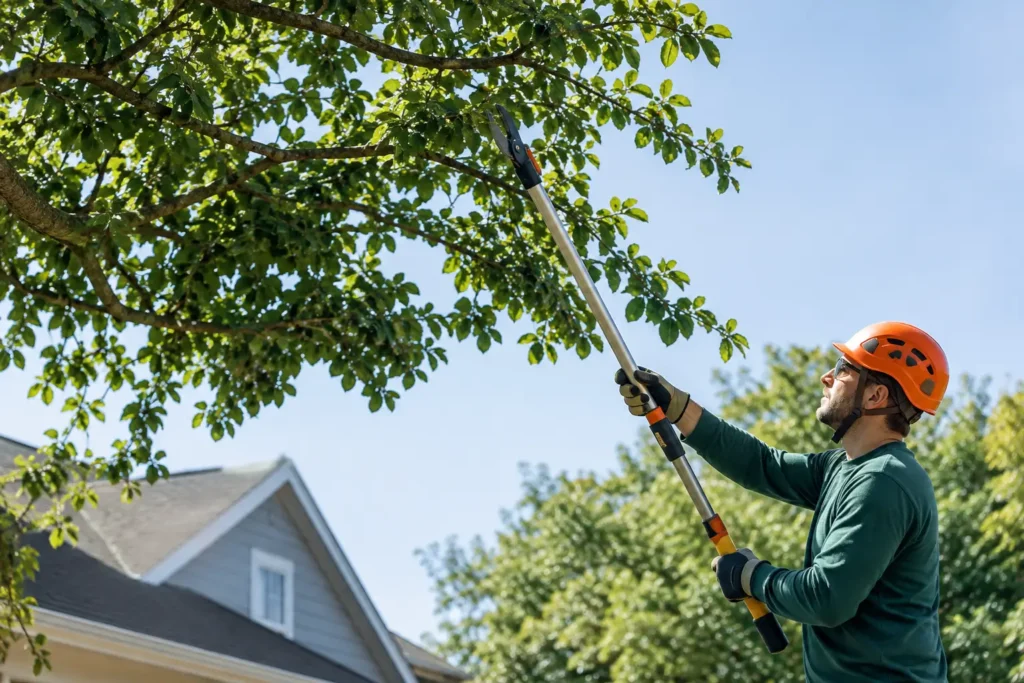
A branch brushing a roof in the wind, blocking a drive or hanging over a new fence is more than a garden nuisance. Left alone, it can damage tiles, restrict access, cast unwanted shade and place pressure on a boundary when storms arrive. To manage overhanging tree branches properly, start by looking at the risk, the tree’s condition and who owns the land before any cutting begins.
The right solution is not always to remove every branch that crosses a boundary. Careful pruning can often create safe clearance while keeping a mature tree healthy, balanced and attractive. Where the tree is unstable, heavily overgrown or damaged, a more considered approach is needed.
Start with the immediate risks
Walk around the affected area from ground level and look for what the branches could strike or obstruct. Pay particular attention to roofs, gutters, windows, sheds, garages, vehicles, footpaths, gates and overhead cables. A branch that is clear in calm weather may move significantly in strong wind, particularly if it has a long, heavy limb or dense leaf growth.
Dead wood, split limbs, hanging branches and fungal growth around the trunk are warning signs worth taking seriously. So are roots lifting nearby ground, a tree leaning more than usual, or soil that has cracked after prolonged rain. These do not automatically mean the tree will fail, but they do mean it should be assessed by someone experienced before work is planned.
Access matters as much as the tree itself. A branch over a shared driveway, pavement or garden entrance can create a hazard for neighbours, visitors and delivery drivers. If it is affecting a route used regularly, do not wait for the next storm to deal with it.
Check ownership and permissions before pruning
Overhanging branches often involve two properties, which can make a straightforward job feel awkward. The best first step is usually a calm conversation with your neighbour. Explain what is affected, whether it is your roof, fence, light, access or safety, and agree a sensible time for the work where possible. Good communication can avoid disagreement and helps ensure the whole job is handled properly.
In many situations, a property owner can cut back growth that crosses onto their land, but only up to the boundary. That does not necessarily give permission to enter the neighbour’s garden, cut beyond the boundary or harm the tree. Cut material may also still belong to the tree owner, so it is sensible to discuss how it will be dealt with rather than leaving a pile of branches by the fence.
Before arranging substantial work, check whether the tree is protected by a Tree Preservation Order or sits within a conservation area. Local planning rules and notice requirements can apply, and protected trees need the correct process followed. If there is any uncertainty, ask for advice before cutting. A rushed job can lead to avoidable damage, neighbour disputes or further cost.
Choose the right type of tree work
The best way to manage overhanging tree branches depends on why they are causing a problem. A light, healthy branch reaching over a path may only need selective pruning to create clearance. A broad canopy pressing against gutters may benefit from crown reduction, where the overall size is reduced carefully without leaving the tree looking harshly cut back.
Crown lifting removes lower branches to improve room beneath the tree. This can be useful for driveways, gates, garden paths and fences, provided enough healthy growth remains to maintain a balanced shape. Removing dead, damaged or crossing branches can also make a tree safer without changing its character.
Tree removal is normally a last resort, but it can be the right answer where a tree is severely diseased, structurally unsound, repeatedly damaging a building or unsuitable for the space it has outgrown. On tight residential sites, removal often needs to be dismantled in sections rather than felled in one piece. This protects nearby roofs, greenhouses, garden walls and boundary fencing.
Avoid asking for a tree to be topped or heavily stripped simply to get a quick result. Severe cuts can leave large wounds, encourage weak regrowth and make future maintenance harder. A tidy, well-considered reduction generally gives a better long-term outcome than drastic cutting.
Keep enough clearance from buildings and boundaries
There is no single gap that suits every tree or property. Fast-growing species may need more regular attention, while a slow-growing ornamental tree may only need occasional pruning. As a practical guide, branches should not be rubbing on roofs, windows, gutters or fencing, and there should be room to inspect and maintain the structure beneath them.
Where a tree grows close to a fence, keep an eye on branches resting directly on panels or posts. Constant movement can crack panels, loosen fixings and shorten the life of a boundary. Pruning the branch may be enough, but if an older fence has already weakened, it may need a repair or replacement section once the tree work is complete.
Know when the job is not suitable for DIY
Small, reachable shoots can sometimes be trimmed with clean hand tools, provided you can work safely from the ground. Anything higher, heavier or close to property is different. Ladders, chainsaws and falling timber are a poor combination, especially on uneven ground or near a fence line where there is little room to move.
Do not attempt to cut branches near electricity or telephone lines. Contact the relevant utility provider or a qualified professional who can advise on the safe route forward. The same applies to storm-damaged limbs caught in other branches. What looks secure from below can release suddenly when weight is removed.
Professional tree work is particularly worthwhile when access is restricted, branches extend over a neighbour’s land, or the tree is close to roofs, conservatories, roads or parked cars. The work should be planned around where sections can be lowered, how people and property will be kept clear, and how all waste will be removed. A clean finish matters: the garden, access route and boundary should be left safe and tidy once the work is done.
Plan maintenance before the problem returns
Most overhanging branch issues become expensive only after years of being ignored. A planned maintenance visit can identify growth heading towards a roof or boundary before it becomes urgent. It also allows pruning to be carried out at an appropriate time for the species and the condition of the tree.
After high winds, heavy snow or prolonged wet weather, inspect trees again from a safe distance. Look for fresh cracks, fallen twigs, new leaning, damaged fence panels and blocked gutters. Take photographs if you notice a change, especially where a branch reaches across a boundary. They can be useful when discussing the problem with a neighbour or requesting a quotation.
If work has been carried out near a fence, check the line after the area is cleared. Posts can be hidden by shrubs and branches, and a slight lean may only become obvious once the vegetation has gone. Dealing with a loose post or damaged panel early is usually simpler than waiting until the next spell of bad weather.
A practical approach for homes in and around Newtownabbey
For homeowners in Newtownabbey, Glengormley, Belfast and nearby areas, mature trees often sit close to homes, narrow side passages and established garden boundaries. That makes careful access planning essential. The aim should be to solve the issue without creating another one, whether that means protecting a roof, preserving a valued tree or keeping a neighbour’s garden undisturbed.
Abbey Tree and Fencing Services can assess overhanging growth, explain the practical options clearly and carry out safety-focused tree work with respect for surrounding fences, buildings and access points. The appropriate recommendation may be a small prune, a crown reduction, storm-damage clearance or more substantial work, depending on what the site needs.
A well-managed tree should add to a property rather than constantly threaten it. Acting while branches are still manageable gives you more options, keeps costs more predictable and helps protect the home and boundary you have worked hard to maintain.