
A mature tree can be one of the best features of a garden until it begins blocking light, overhanging a roof or putting pressure on a boundary. Deciding on tree pruning versus removal is not simply a matter of making the garden look tidier. The right choice depends on the tree’s condition, its position, and the risk it presents to people, property and access routes.
For many homeowners in Newtownabbey and the surrounding area, careful pruning is enough to make a tree safer and more manageable. In other cases, removal is the sensible long-term answer. Honest advice starts with looking at the whole site, rather than recommending the biggest job by default.
Tree Pruning Versus Removal: The Main Difference
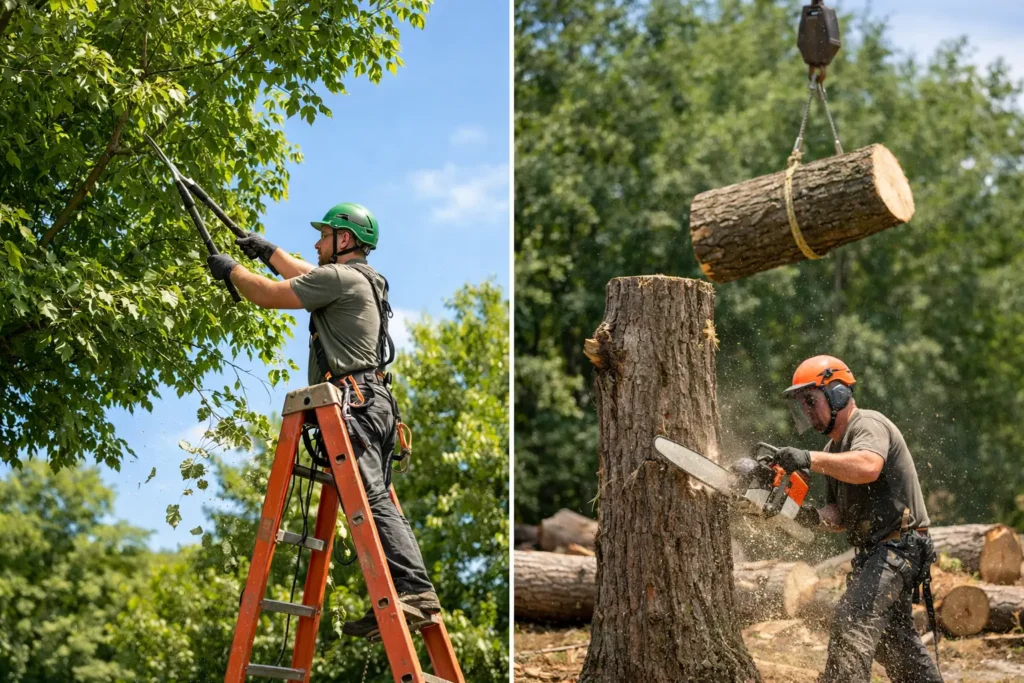
Tree pruning keeps a tree in place while improving its shape, health or safety. It can involve removing dead branches, reducing an overextended crown, lifting lower growth away from paths, or thinning selected areas to allow more light and air through. Done properly, pruning retains the benefits of the tree while addressing a specific problem.
Tree removal means taking the tree down completely, normally in controlled sections where there is limited room or nearby property to protect. The stump may then be left at ground level, ground out, or dealt with separately depending on future plans for the area.
Neither option is automatically better. A healthy tree that is simply casting too much shade may respond well to crown reduction. A badly decayed tree leaning towards a house, garage, fence or public footpath may need to be removed before it fails. The decision should be based on evidence, not guesswork.
When Pruning Is the Better Option
Pruning is usually the first consideration when a tree is structurally sound and can be made safer without harming its long-term health. It is particularly useful when branches are growing over a driveway, brushing against a roof, restricting access to a shed, or taking light from a patio or lawn.
A crown reduction can reduce the overall height and spread of a suitable tree, easing wind loading and creating better clearance around buildings. It should not leave the tree looking harshly cut back or unbalanced. A considered reduction keeps a natural shape while removing enough growth to achieve the practical aim.
Deadwood removal is another common form of maintenance. Dead or damaged branches can drop without warning, especially after high winds. Removing them helps protect garden users, vehicles, conservatories, fences and neighbouring property without taking down a tree that is otherwise healthy.
Pruning can also help where lower branches are causing day-to-day problems. Lifting the crown above a path, gate, driveway or parking space improves clear access. This can be especially valuable where delivery vehicles, refuse collections or emergency access need room to pass safely.
There are limits, however. Removing too much of a tree in one visit can cause stress, encourage weak regrowth and create future maintenance issues. A professional recommendation may be to carry out measured work now and review the tree over time, rather than making an excessive cut for a quick result.
Signs a Tree May Benefit From Pruning
A tree may be suitable for pruning where it has healthy growth but is overhanging a roof, competing with garden space, blocking useful light or developing branches that rub together. It may also need attention after a storm, when broken limbs are left hanging within the crown.
The key question is whether the tree’s main trunk, root area and major branch structure remain sound. If they do, well-planned maintenance can often extend the tree’s safe and useful life.
When Tree Removal Is the Safer Choice
Removal becomes more likely when a tree has a serious defect that pruning cannot reasonably solve. This could include extensive decay in the trunk, a large split, major storm damage, fungal growth associated with internal rot, severe lean, root disturbance or repeated loss of substantial limbs.
Location matters just as much as condition. A tree may be viable in an open field but unsuitable beside a home, boundary fence or narrow shared access. If it is growing too close to foundations, pressing against a wall, interfering with overhead lines, or regularly damaging fencing, retaining it can become an ongoing expense and safety concern.
Some trees have simply outgrown the space available. Large conifers planted close to houses can eventually dominate a small garden, block daylight and shed debris into gutters. Regular trimming may delay the issue but may not provide a durable solution. Removal can give the garden back its usable space and prevent repeated work over the years.
A dead tree should always be treated seriously. Even if it still appears upright, its timber may have weakened internally. Wind, heavy rain and changing ground conditions can cause failure with little warning. Where a dead or unstable tree could reach a building, road, neighbour’s garden or access route, prompt professional assessment is sensible.
Removal Does Not Have to Mean Disruption
People often worry that taking down a tree will damage lawns, flowerbeds, gates or fence panels. The method should be matched to the site. In a tight residential garden, a tree can often be dismantled piece by piece, with sections lowered in a controlled way rather than dropped.
Good site preparation also matters. Access routes should be protected, nearby structures considered and waste cleared properly once the work is complete. If a boundary has already been damaged by roots, falling branches or storm conditions, arranging fence repair or replacement alongside the tree work can save time and reduce further disturbance.
Factors That Decide Between Pruning and Removal
A proper assessment looks beyond the visible branches. The tree’s species, age, previous pruning, soil conditions and proximity to structures can all affect the recommendation. A fast-growing tree may tolerate regular management, while an older specimen with decay may have little capacity to recover from heavy reduction.
The time of year may also influence the work. Certain pruning tasks are better timed around growth cycles, nesting activity and the condition of the tree. Before work begins, checks should be made for nesting birds and any legal protections that may apply to the tree or site. If a tree is covered by a Tree Preservation Order or sits within a conservation area, permission may be required before work can go ahead.
It is also worth thinking about what happens after the work. Pruning may mean a follow-up maintenance programme every few years. Removal is more final, but it can create an opportunity for a smaller replacement tree, a new fence line, improved lawn space or more daylight in the home. The best decision is the one that solves the immediate issue without creating a bigger problem later.
Why DIY Tree Work Often Creates More Risk
Small, reachable garden jobs are one thing. Working at height with chainsaws, ladders, heavy branches and unstable timber is another. The most difficult parts of tree work are often impossible to judge from ground level, including hidden decay, tension in limbs and where a branch will move once cut.
A falling section can damage roof tiles, glazing, vehicles, sheds, power cables or boundary fencing in seconds. It can also block a driveway or shared lane. Attempting to save money with an unsuitable ladder or domestic saw can quickly lead to injury and a more costly repair.
Professional tree work is planned around safe access, controlled cutting and protection of the area below. For storm-damaged trees, urgency should not mean rushing into unsafe action. Keep people clear, avoid touching hanging branches or damaged cables, and arrange a safety-led inspection as soon as possible.
Choosing a Practical Long-Term Solution
If a tree is healthy and the problem is limited to shade, clearance or a few overgrown limbs, pruning is often the most balanced route. You retain privacy, greenery and character while improving the way the garden works.
If the tree is unstable, badly diseased, repeatedly damaging property or unsuitable for its location, removal may offer greater peace of mind. It can protect the home and boundary, improve access and stop a manageable concern turning into an emergency.
Abbey Tree and Fencing Services provides straightforward assessments for homeowners who need a clear recommendation, tidy workmanship and careful protection for the surrounding property. Whether the answer is selective pruning, crown reduction, storm-damage clearance or full removal, the work should fit the condition of the tree and the needs of the site.
The most useful next step is to have the tree assessed before the next period of high winds or before a small issue reaches the roofline, driveway or fence. Early action usually gives you more options and a safer, neater result.